
I just read a rather large article on the cover the Sunday New York Times Review section about pornography and adolescents that basically summarized multiple studies as inconclusive at best. I have a first hand perspective having seen the effects of premature exposure to porn first hand in clinical practice with sex addiction. Pornography is addictive and harmful, especially to adolescents and young adults. I say this because I have listened to countless stories of desensitization and trouble with intimacy. Desensitization basically means that normal, healthy sex is boring and sometimes nearly impossible for people whose neurology has changed as a result of overexposure to porn. Watching more and more porn leads some people to view harder, stranger, and rougher material as their dopamine system seeks greater stimulation.

Category Archives: Health
I am a huge Gabriel Cousens fan. An M.D (psychiatrist), accomplished author, homeopath, and deeply spiritual being (enlightened), he exemplifies creativity, knowledge, grace, and contribution. His Tree of Life Foundation in Arizona offers all kinds of experiences and knowledge on nutrition, meditation, spirituality as well as a host of other important perspectives on living a healthy, successful life! His books science, spirit, and nutrition are profound. When I read his book Spiritual Nutrition several years ago after going through a devastating health crisis that cost me my health, my business, my self-esteem, my relationship and much more, I finally realized what had happened to me. Dr. Cousens is a true genius! In his words,”I am at peace in my body, mind, family, community, ecology, and with God.” Thank you Dr. Cousens!
I just spent the last two days at Squaw Valley doing a travel writing gig. Before I left, the PR director for the resort took me out to lunch at High Camp, a restaurant far up the mountain. Not only were the views spectacular but the conversation was refreshingly deep. The young woman grew up in Newport, RI and attended several prestigious private schools. Now she lives in the heart of the Sierra Nevada’s enjoying an outdoor culture based largely on lifestyle and happiness far removed from the rat race. She told me that she finds travelers to be the most interesting people to meet and converse with because they tend to be more open minded and aware having experienced so many different people and cultures. Her parents, who lived conventional lives, don’t always understand her or how she lives more in the moment. They planned and saved and did what they were supposed to do. Nothing wrong with that she says but they can’t really guide her as she feels parents should. I told her that I teach people through a combination of meditation and mindfulness to develop their own internal guidance system so that they are less influenced by others who may not truly understand them. Instead we learn to go inward for answers and trust our intuition. After all, it is simply the best way to live!
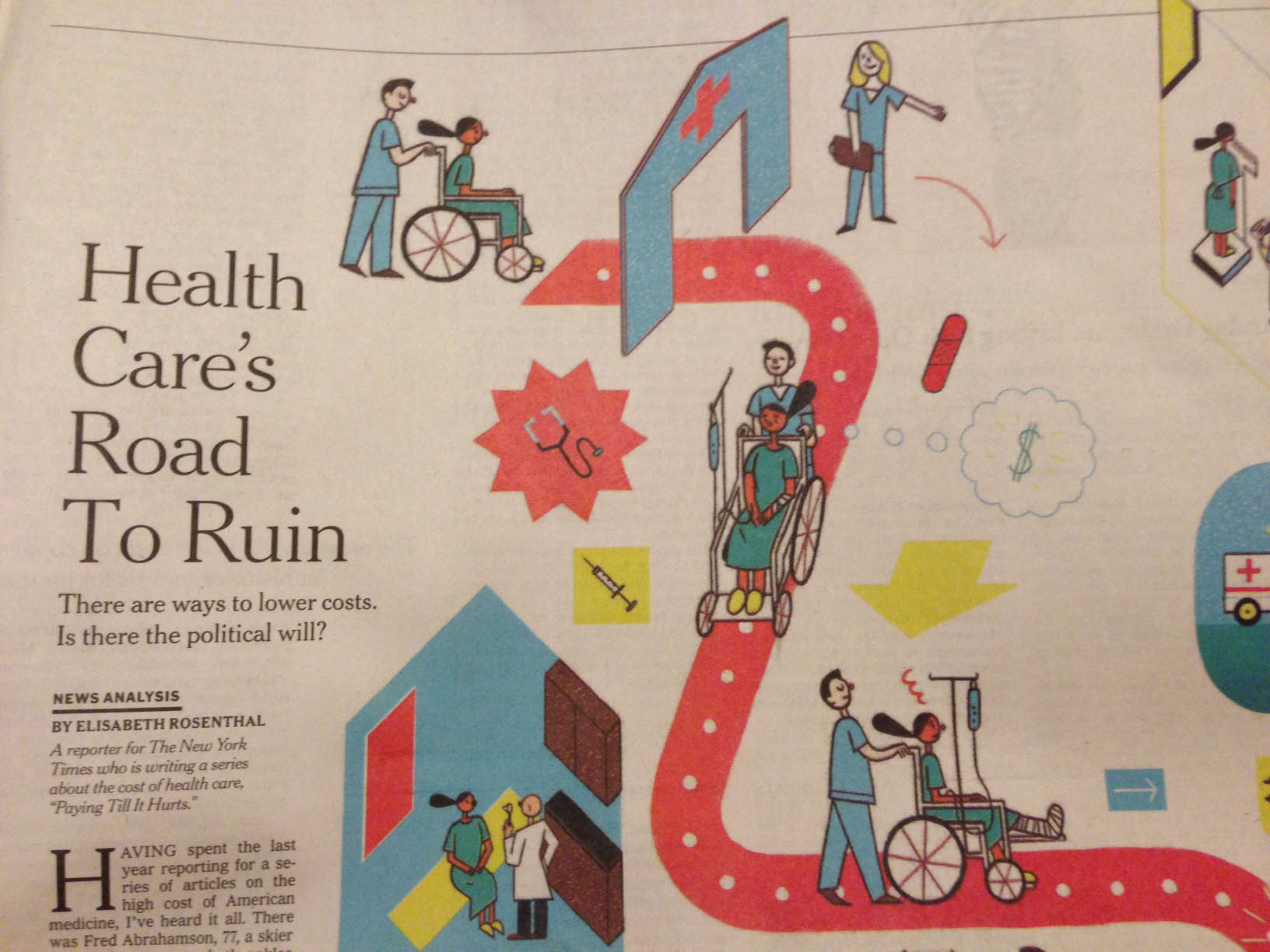
An article in the Review section by Elizabeth Rosenthal of The New York Times points to the challenges and potential fixes to providing affordable care to all Americans. Some 80 percent of all health care expenditures are used for just 10 percent of the people and much of that is during the last weeks of life or in treating chronic illness. And then there are ridiculous stories of hospitals bilking patients for little stuff like five hundred dollars a stitch or a hundred thousand dollars for antivenin for a snake bite. Obama-care is a start and a frustrating one at that. For instance, we could cap fees for certain procedures or reduce medical school tuition by requiring service but all these initiatives take political will and as we all know, change is not easy. We could pay more for preventative care and less for traditional care. The ideas are available. The more we educate ourselves, the better. Many counties pay much less than Americans due for better care!
An article in the Business section of the Sunday New York Times suggests that testosterone replacement therapy has become a marketing bonanza with sales of popular drugs like Androgel to treat “low-T” becoming blockbusters. The problem of course is that a lot of the trend is driven by profits and not necessarily effective research. Simple tests for low-T are so general that anyone stressed or depressed could fail them. For instance, do you have low energy or decreased libido? Many middle aged men might say yes when the underlying cause could be stress. Instead of using drugs with potentially harmful side effects like increased incidence of heart disease or cancer, psychotherapy or behavioral change is far safer and perhaps just as effective longer term. There simply isn’t enough research to keep up with all the marketing hype. Sound familiar? Money from drug sales often outcompetes the hard work of behavioral change. As always, sometimes drugs are necessary but many times they are simply profit centers for big business.
An article in the Sunday Review section of The New York Times addresses the link between insomnia and depression stating that new research suggests the link goes both ways. Anyone who has ever experienced insomnia knows this intuitively as sleep or lack of sleep clearly affects one’s mood. The research also suggests that brief cognitive behavioral therapy with an antidepressant pill is the best form of treatment. In my extensive clinical experience (30,000 plus hours) this advice is simplistic. I watched a famous doctor on television suggest that everyone with high blood pressure should be on medicine. Pills are problematic in general. For instance, research also suggests that regular exercise is just as effective in treating mild to moderate depression as antidepressants. Cognitive behavioral therapy for insomnia is a no-brainer. Medication, however, is often toxic to the body and has significant side effects that many doctors understate. Anyone who has ever been on an antidepressant understands this as well. Sometimes, drugs are necessary and clearly helpful but not without a cost. Behavioral change, though difficult, is a better long-term solution. If you are stuck in a job or relationship that you can’t stand or don’t have the skill to create, then a pill will have limited value. Finding the right coach, mentor or therapist and making tough decisions or difficult changes is often the best remedy. Pills should be a last resort.
An article in the Sunday Review section of The New York Times by Mary Lou Jepson, a Silicon Valley entrepreneur, is fascinating. It took years of increasingly desperate and bizarre symptoms for doctors to finally discover a pituitary tumor that decimated her body’s ability to produce hormones, especially cortisol, a stress hormone key to immune function. Being proactive, she took it upon herself to get the proper treatment when many doctors dismissed her needs or didn’t get proactive enough themselves. As she writes: “without the ability to fine-tune my hormones and neurochemicals I believe I would have been trapped as a near-imbecile, wheelchair-bound, in my mother’s basement for an abbreviated and miserable adult life.” I coach everyone I work with to develop and trust their instincts, and be proactive and engaging! Clearly, Ms. Jepson’s ability to do so has been a huge part of her recovery and success. Great job!!
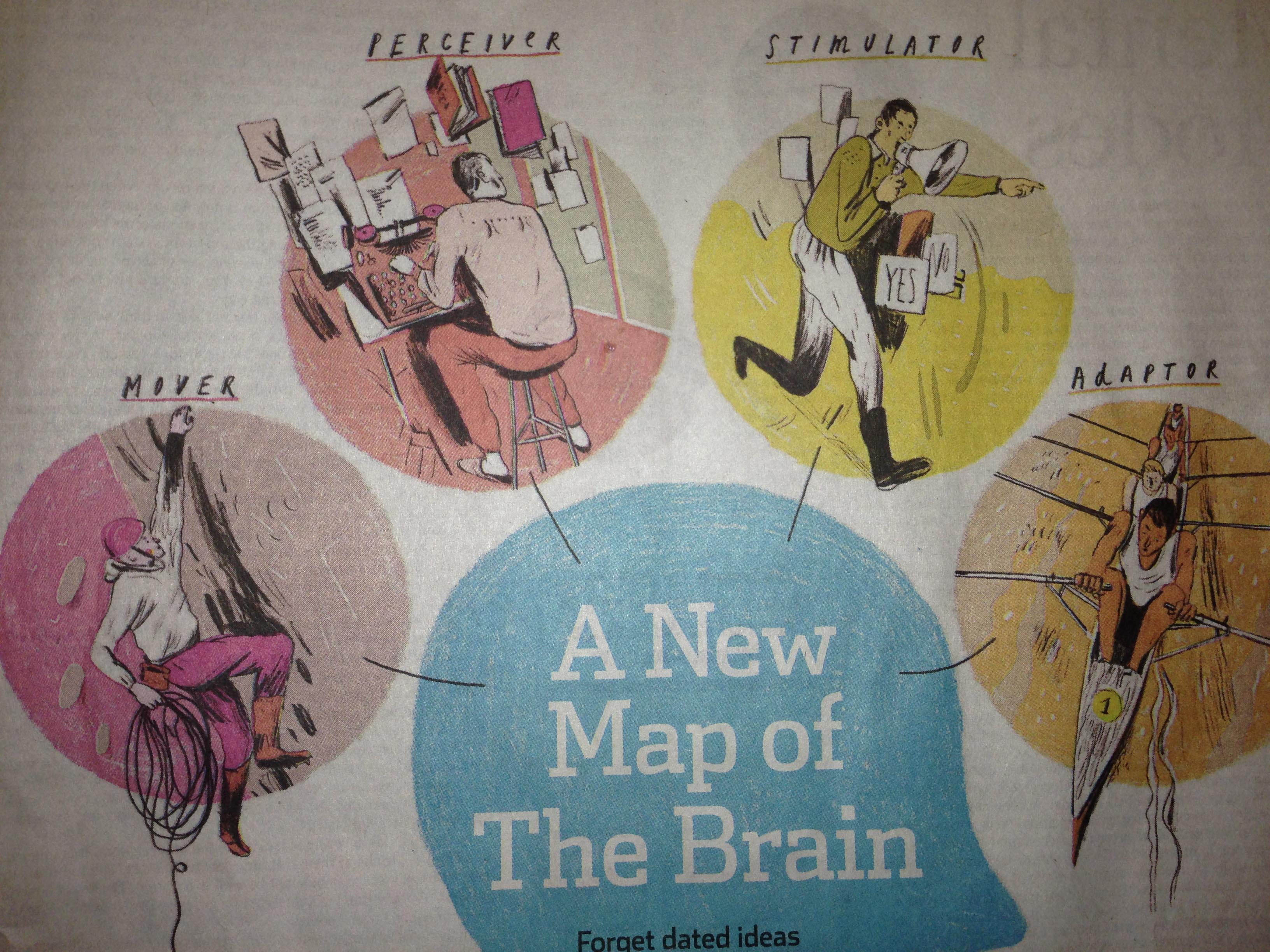
According to Dr. Kosslyn and Wayne Miller, authors of a new book called “Top Brain, Bottom Brain: Surprising Insights Into How You Think,” the right brain, left brain theory of different skill sets like intuition and logic is not true and based on a myth created from experiments on the corpus callosum decades ago. Instead, they propose an understanding of thinking styles based on top or bottom preferences: Mover, Perceiver, Stimulator and Adaptor! Their article in the Weekend Wall Street Journal Review section is worth reading. Instead of thinking of people as basically left or right brained such as engineers or artists , this new research encourages us to understand that there are really four main styles not two!
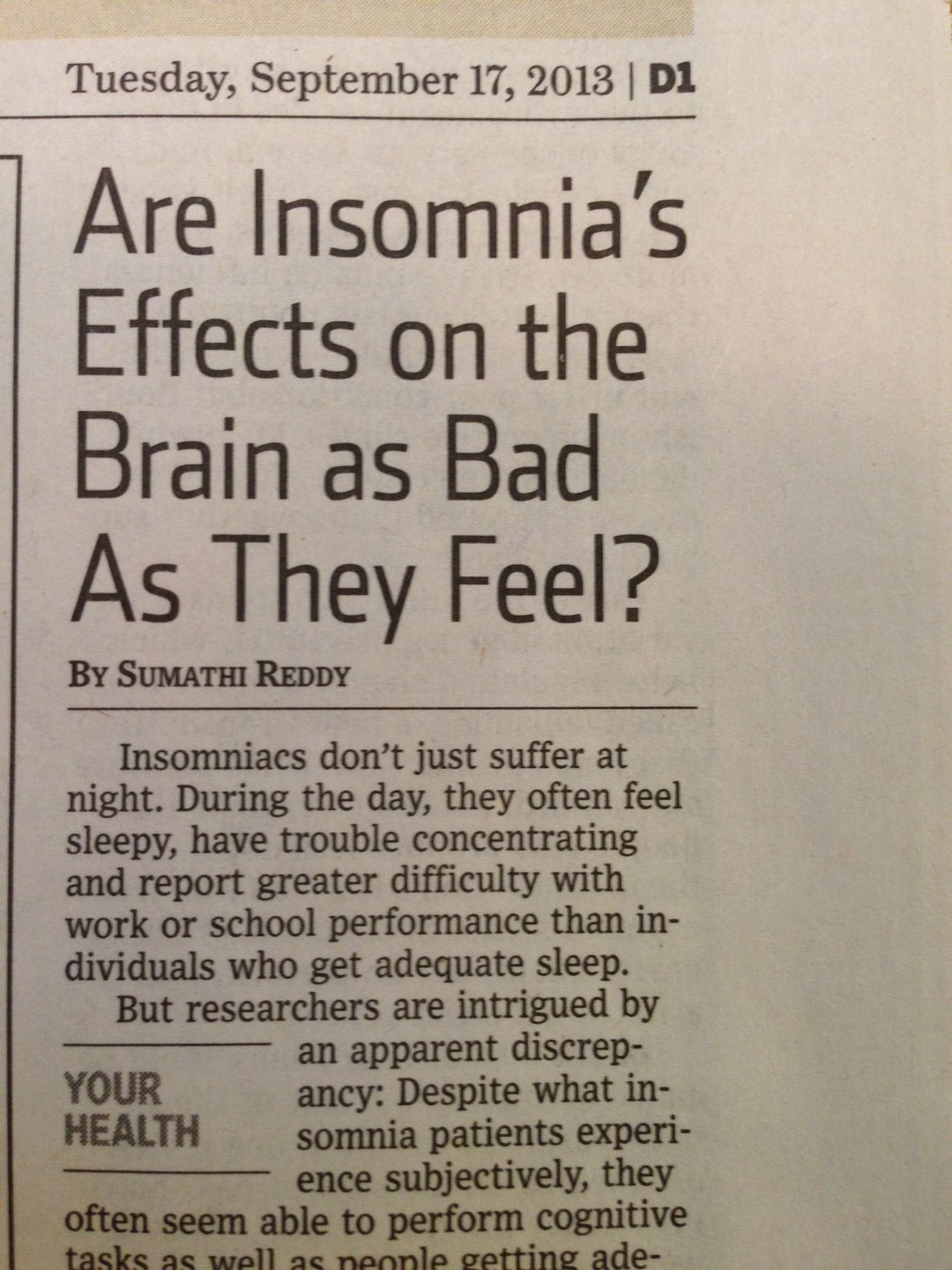
Having experienced several bouts of severe insomnia in my past I found it informative to find out something I ready knew: that although insomnia is painful emotionally and can lead to physical exhaustion and other challenges but one’s cognitive abilities remain largely intact. In other words, though you may feel less intelligent or capable as a result of much less sleep, in reality, you can function well regardless. I did. The challenge, of course, is to address the underlying cause and dynamics before one’s health and well-being is affected. For me, this was complex and multifaceted. For some, it may be less so: cut out substances that interfere with sleep like caffeine and change your job/ relationship or whatever is truly not working in your life. A really good coach or therapist might be helpful too. Sleeping pills are problematic and a slippery slope so be careful!
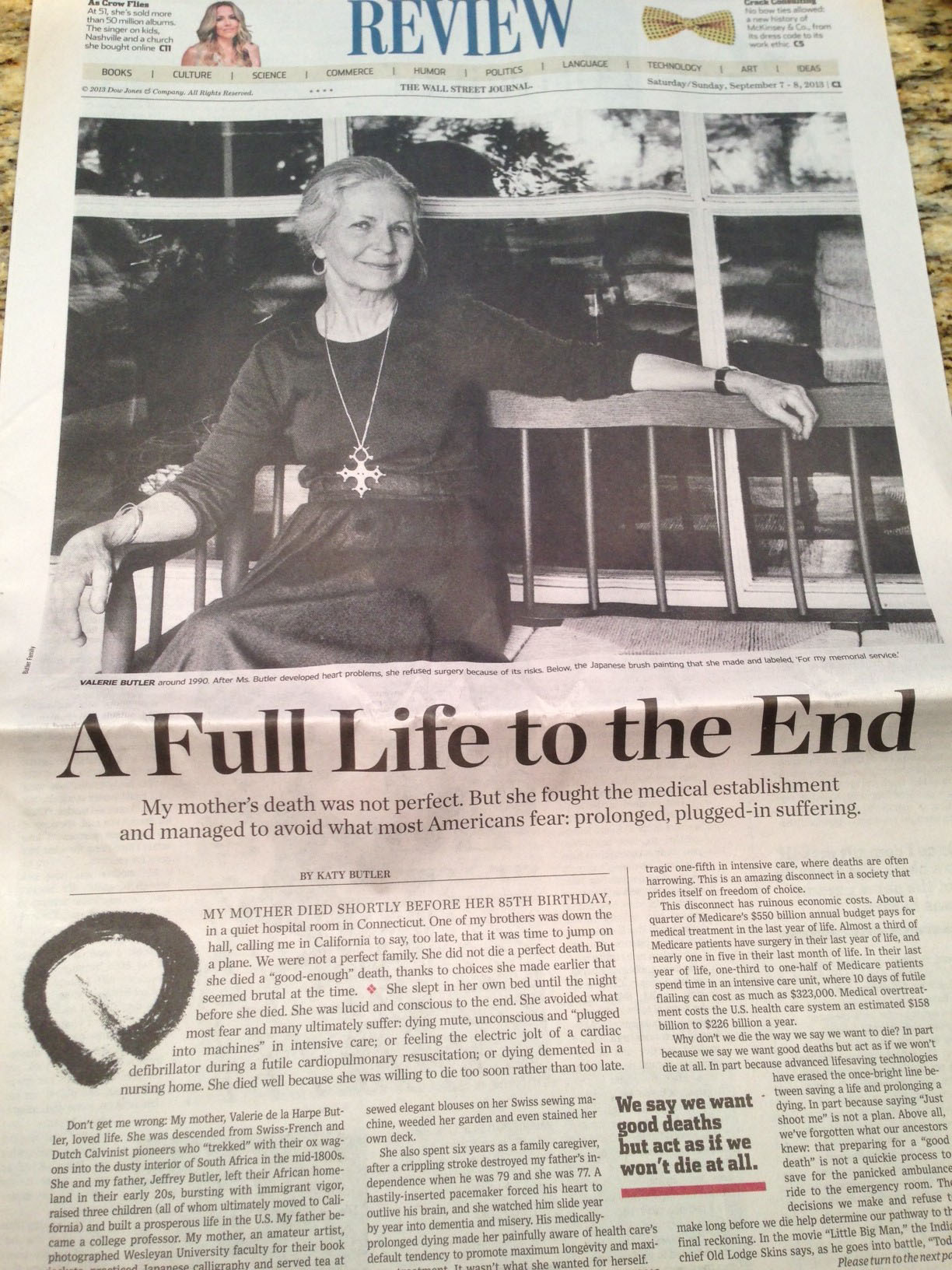
Katy Butler’s mother chose not to have a heart operation at 85 years old that may or may not have prolonged her life another few years. Though many people encouraged her to go for it, including her daughter the author of this article, she declined in large part because she didn’t want to take the risk of ending up like a vegetable as many elderly do when they have serious operations at advanced ages. Einstein chose not to prolong his life at the end when he refused surgery for an aortic aneurysm. He wanted to die with dignity and self-respect having done “his share.” Far too many people try to save their elderly parents from dying gracefully by doing everything possible to give them an extra few months of life. Not only does this tax the Medicare system to the tune of hundreds of billions of dollars each year but it often results in additional suffering. A friend of mine had a “do not resuscitate order” for her dying mother that was ignored by busy hospital staff which led to weeks of horrendous and unnecessary suffering and of course cost Medicare hundreds of thousands more. Learning to accept death is not easy for any of us but keeping people alive for the wrong reasons isn’t right. Valerie Harper led a long, dignified life and she chose to let go when she was ready even if others around her weren’t – very cool!