
This Aaron Chang photograph of the Milky Way Galaxy reminds me of the limitless nature of life and the cosmos! It’s easy to become caught up in the day to day challenges of living and forget that we live on a rock spinning on its axis at thousands of miles per hour, hurling around the sun in a system that rotates around our galaxy which is interconnected with other galaxies trillions of light years away. Sometimes, dI coach people to look up at the sky every once in a while to remind oneself how truly amazing this whole experience is!
Tag Archives: psychologist
I recently began working with a high school baseball pitcher with a big dream: he wants to work in the front office of a Major League Baseball team one day! I asked him if wanted to be a GM and he replied that was like asking him if he wanted to be the president of the United States one day! I smiled.
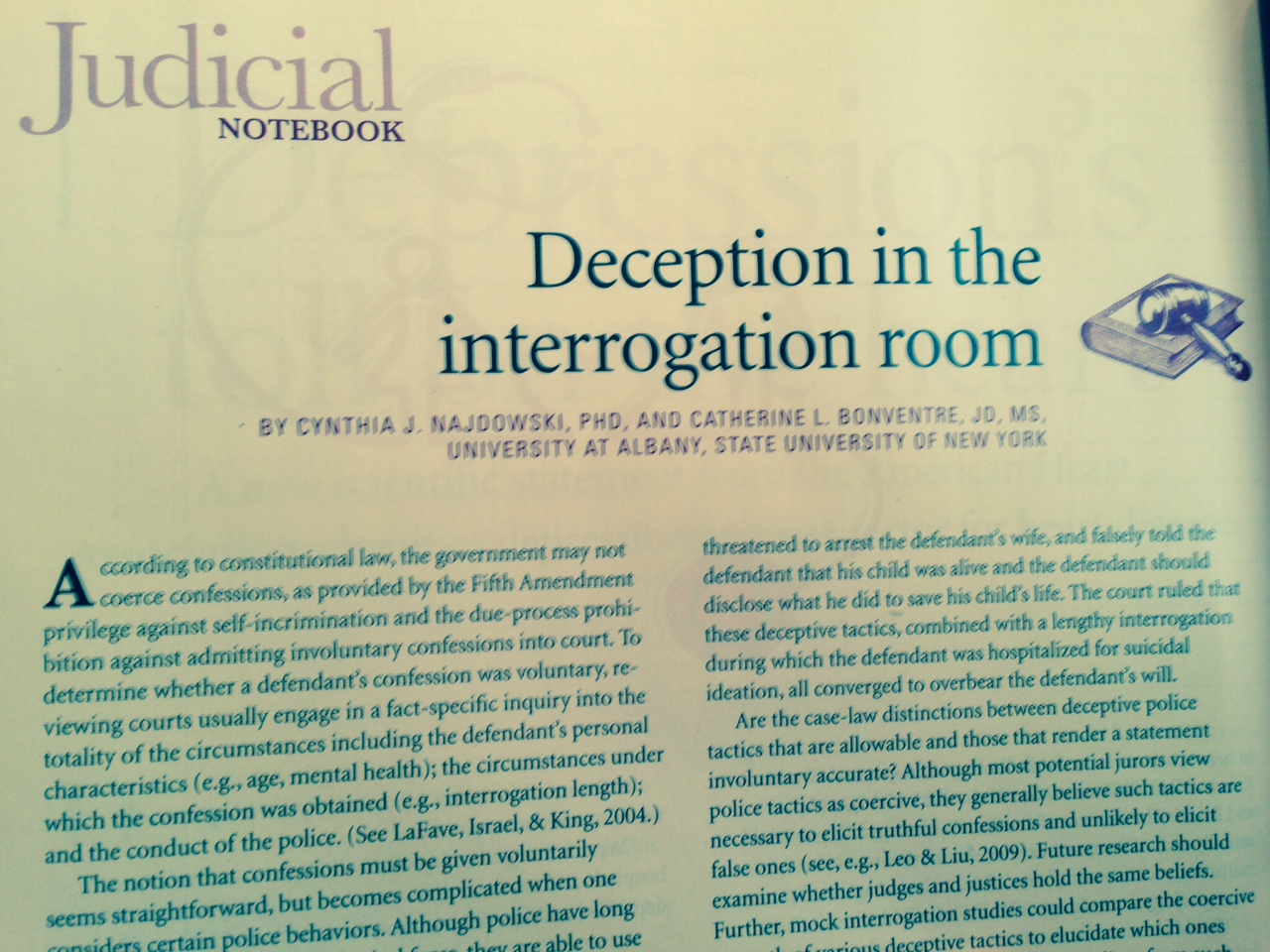
An article in the May issue of the Monitor on Psychology published by the APA (American Psychological Association) titled ‘Deception in the interrogation room’ informs us that police can use a variety of deceptive practices to coerce a suspect into a confession. For example, it is permissible to tell a criminal suspect that his confederate confessed when he had not and say that a suspects fingerprints were at the scene when there were none! There are some limits, however, like telling a suspect that his statements won’t be used against him but other forms of outright lying are permissible. As the authors write, “although most potential jurors view police tactics as coercive, they generally believe such tactics are necessary to elicit truthful confessions and unlikely to elicit false ones.” Very interesting!
The feature article in the April 13, 2014 New York Times Sunday Review section entitled “Raising A Moral Child” by Adam Grant covers the fundamentals of good parenting that every person, not just parent, should know. Essentially, we need to be mindful of the difference between shame and guilt and make sure we are never shaming our children or others for that matter. Shame is the feeling that one is a bad person while guilt refers to one’s behavior being wrong. If we learn to praise good character and punish bad actions essentially we are on the right track. Children who are praised for good character show far more generosity and caring in research studies.
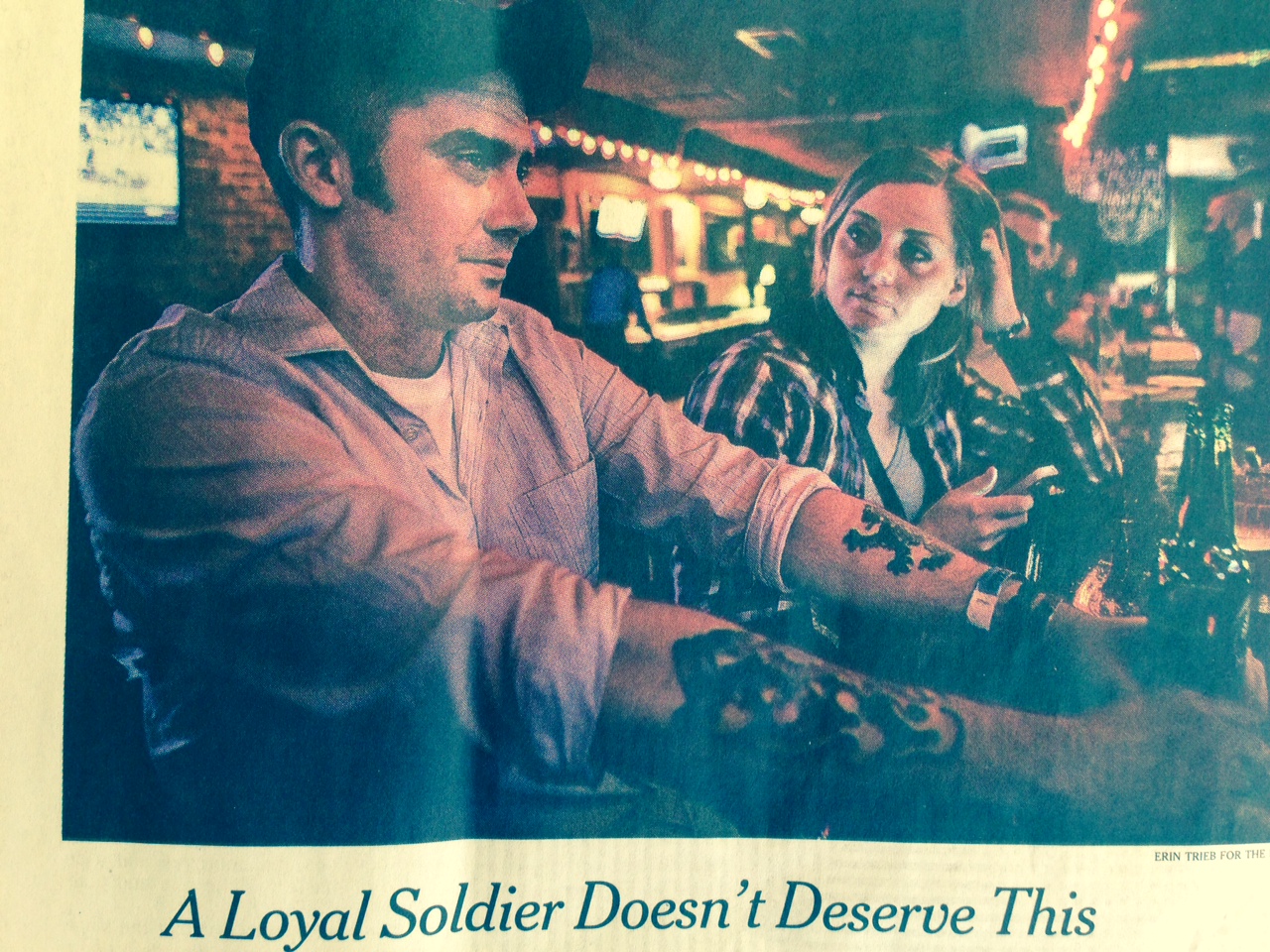
Nicholas Kristof’s column in the Sunday Review section of The New York Times chronicles the travails of Mike Yurchison, an Iraq war veteran battling head injury and PTSD (post traumatic stress disorder). His girlfriend of three and a half years is struggling too, not sure if she can continue to hang in there with him considering all the challenges of dealing with a man shattered by war and mental illness. According to Mr. Yurchison, psychiatry has helped him become addicted to opiates and otherwise he has found these doctors “unhelpful.” This is too often the case. Veterans of Iraq and Afghanistan are killing themselves at alarming rates. Mike’s brother and close friend, both veterans, recently killed themselves. We also see periodic rampages at military bases such as Fort Hood where medication is often part of the picture.
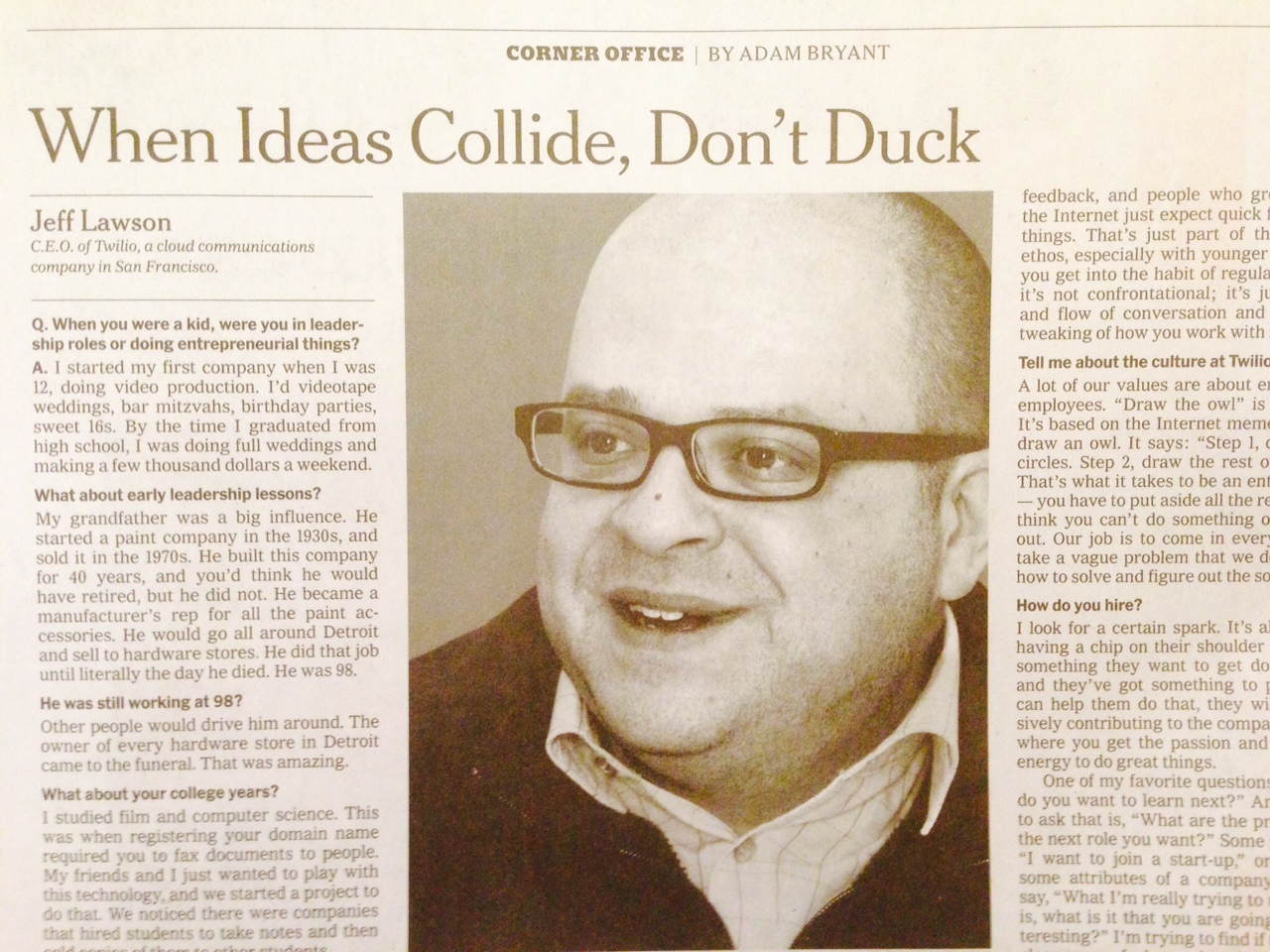
Adam Bryant interviews Jeff Lawson, the C.E.O of Twilio, a cloud communications company based in San Francisco in this week’s Corner Office section of the Sunday New York Times business section. An entrepreneur since age 12 when he started a video production business, Mr. Lawson discusses the value of communication and resolving conflict something his crew rarely did in his next enterprise, a dot.com company.
The cover article for the Sports Sunday section of this weekend’s New York Times features excerpts from ‘Cycle of Lies’ Juliet Macur’s new book on Lance Armstrong. Reading this story reminds me of several conversations I had with a professional riding coach when I lived in New Mexico in 1997. It was obvious then that the culture of professional cycling was so corrupt that Lance had to be cheating. I used to share that belief with others well before it became obvious to the world. The challenge for all of us who try to live with high integrity is what to do when everyone around you is cheating? For a competitive cyclist to succeed then you simply had to cheat. If you didn’t, someone else would and that would put you at a significant disadvantage not just in terms of winning but around fame, fortune, and your ability to make a living at the sport you loved.
I have spent quite a lot of time with both the rich and the poor in my life. As a psychologist, especially in training, I worked in residential treatment centers and hospital settings with the homeless mentally ill and others of few means. I also worked with poor children at a Head Start program and taught in an inner city college environment. Being an identical twin to a Wall Street guy and having lived and worked in an affluent community for the past 17 years, I have a fair amount of exposure to the wealthy including many affluent friends and clients. In general, I agree with Mr. Goleman’s perspective that the wealthy and more powerful tend to “pay less attention to us than we do to them,” a prerequisite for empathy! Less empathy means less caring. I just read another article in the New York Times business section about the CEO of Bloomingdales who values empathy, caring, and listening a great deal. I loved reading about Mr. Gould and hope others in positions of power and authority will emulate him!
A client in his late forties came to see me because he was having marital difficulties. On the surface it appeared that his wife is a demanding person who rarely appreciated him. His chief complaint was that she didn’t want to have consistent sex with him and that she wanted him to make more money. As we got to the heart of the matter over time, he began to share how truly unsafe he felt in their marriage. In his perception, reaching out to her and expressing himself invited criticism in return. He often felt punished and attacked. Instead of communicating, he gradually began to ignore her and avoid intimacy. Does this sound familiar?