
I am a huge Gabriel Cousens fan. An M.D (psychiatrist), accomplished author, homeopath, and deeply spiritual being (enlightened), he exemplifies creativity, knowledge, grace, and contribution. His Tree of Life Foundation in Arizona offers all kinds of experiences and knowledge on nutrition, meditation, spirituality as well as a host of other important perspectives on living a healthy, successful life! His books science, spirit, and nutrition are profound. When I read his book Spiritual Nutrition several years ago after going through a devastating health crisis that cost me my health, my business, my self-esteem, my relationship and much more, I finally realized what had happened to me. Dr. Cousens is a true genius! In his words,”I am at peace in my body, mind, family, community, ecology, and with God.” Thank you Dr. Cousens!

Tag Archives: life coaching
I just spent the last two days at Squaw Valley doing a travel writing gig. Before I left, the PR director for the resort took me out to lunch at High Camp, a restaurant far up the mountain. Not only were the views spectacular but the conversation was refreshingly deep. The young woman grew up in Newport, RI and attended several prestigious private schools. Now she lives in the heart of the Sierra Nevada’s enjoying an outdoor culture based largely on lifestyle and happiness far removed from the rat race. She told me that she finds travelers to be the most interesting people to meet and converse with because they tend to be more open minded and aware having experienced so many different people and cultures. Her parents, who lived conventional lives, don’t always understand her or how she lives more in the moment. They planned and saved and did what they were supposed to do. Nothing wrong with that she says but they can’t really guide her as she feels parents should. I told her that I teach people through a combination of meditation and mindfulness to develop their own internal guidance system so that they are less influenced by others who may not truly understand them. Instead we learn to go inward for answers and trust our intuition. After all, it is simply the best way to live!
The cover article for the Sports Sunday section of this weekend’s New York Times features excerpts from ‘Cycle of Lies’ Juliet Macur’s new book on Lance Armstrong. Reading this story reminds me of several conversations I had with a professional riding coach when I lived in New Mexico in 1997. It was obvious then that the culture of professional cycling was so corrupt that Lance had to be cheating. I used to share that belief with others well before it became obvious to the world. The challenge for all of us who try to live with high integrity is what to do when everyone around you is cheating? For a competitive cyclist to succeed then you simply had to cheat. If you didn’t, someone else would and that would put you at a significant disadvantage not just in terms of winning but around fame, fortune, and your ability to make a living at the sport you loved.
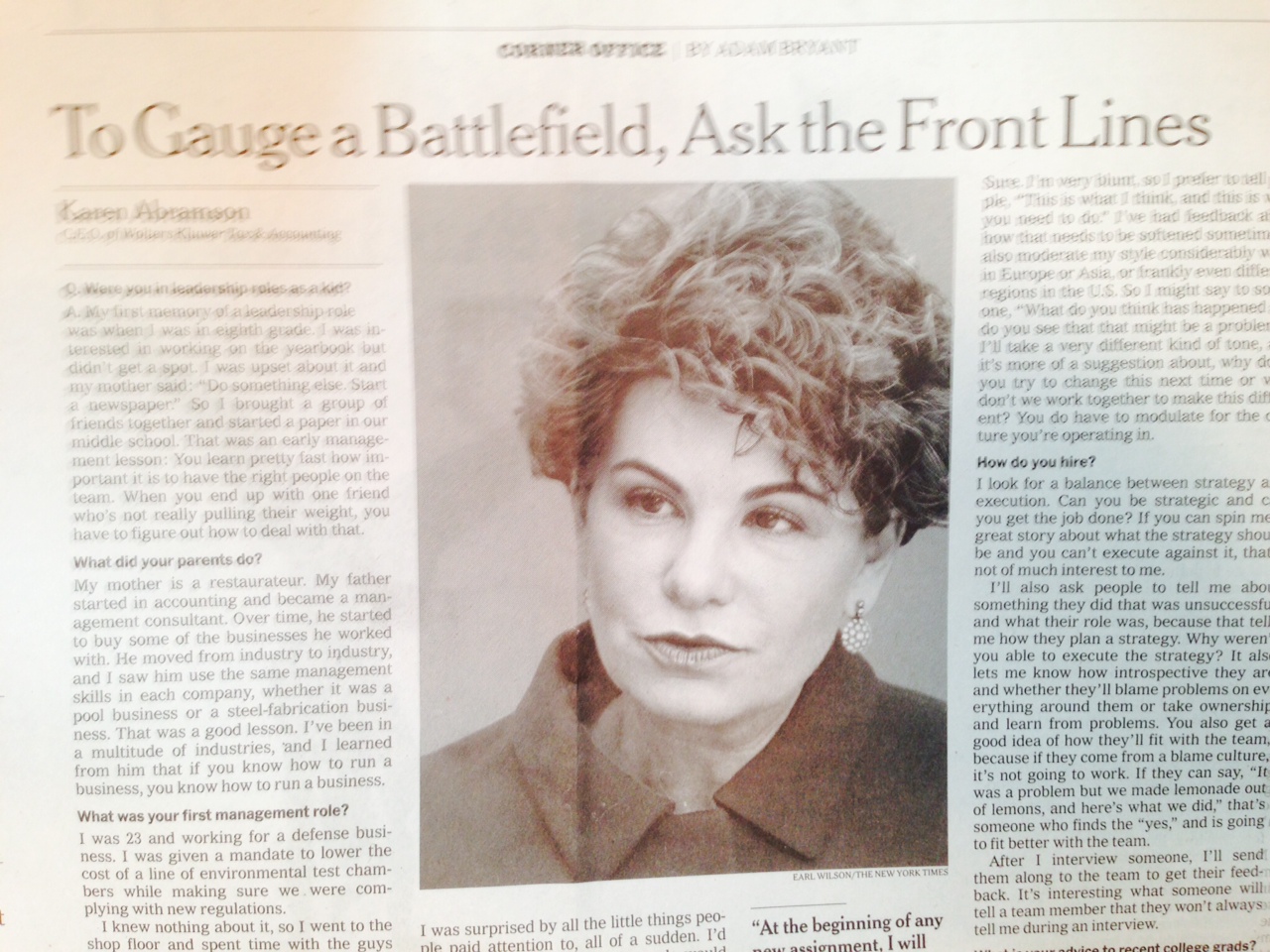
I just came across a Corner Office interview when I was cleaning my house yesterday after my girlfriend took one of our dogs and left for the LA area where we intend to set up shop eventually! Apparently, I had saved the Sunday Business section from the first week of January and didn’t read it till today. Karen Abramson, the C.E.O. of Wolters Kluwer Tax & Accounting, learned from her father, a business manager and owner, that if you have the skills to successfully run one business, you can use those same skills to run just about any business! I agree in general. A leader who is present, focused, clear, determined, and loyal can create success wherever they go.
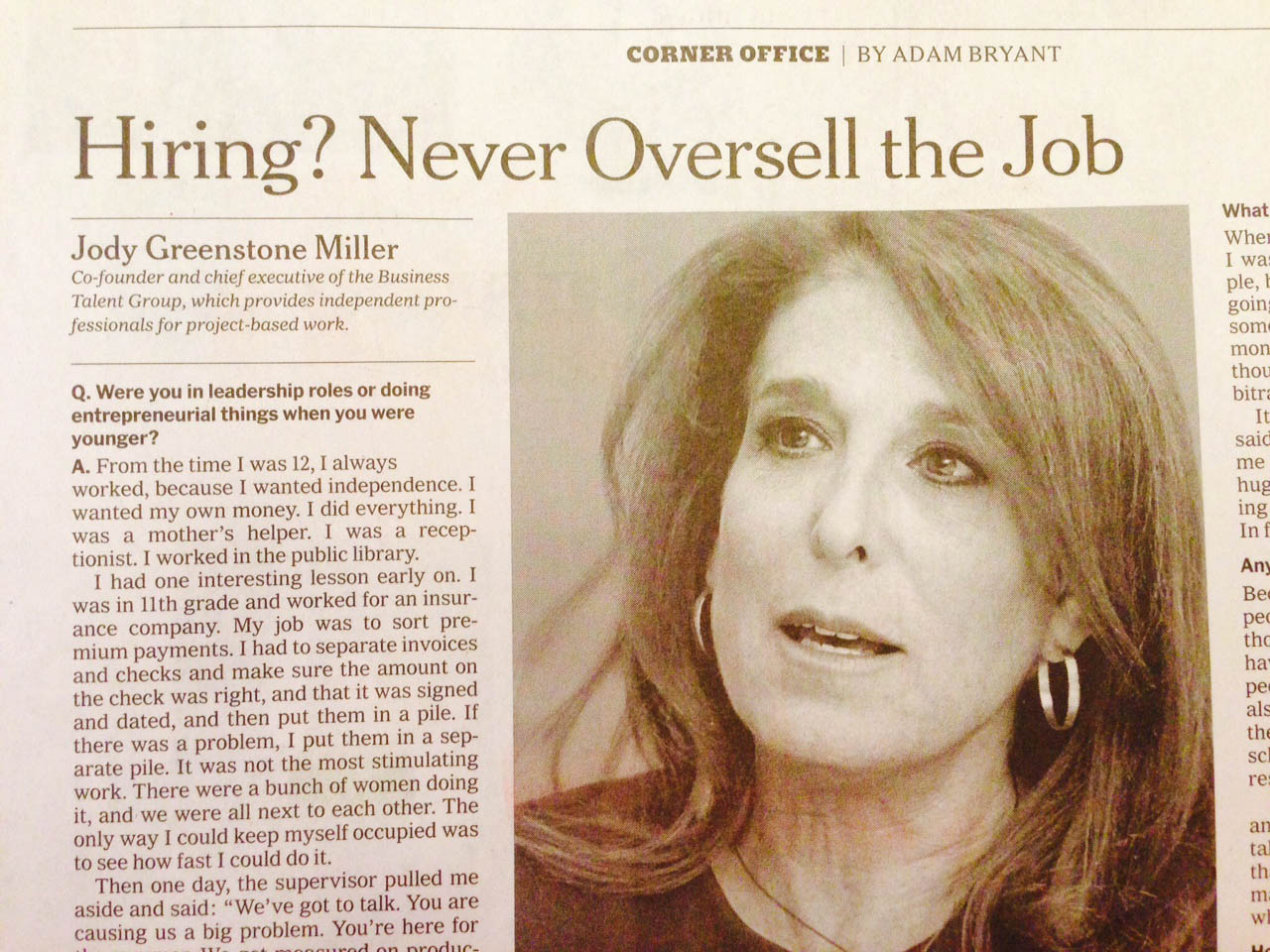
Each week I do a quick little blurb on Adam Bryant’s interviews in the New York Times Sunday Business section. This week he interviewed Jody Greenstone Miller, the co-founder and chief executive of the Business Talent Group, a provider of project based talent. I enjoyed her open and honest style but what stood out for me most was her desire to hire optimistic people who are problem solvers not just problem spotters.
Adam Case, the 35-year-old offensive coordinator of the Denver Broncos never played college football and was a mediocre high school tight end by all accounts. Through a combination of hard work, ingenuity, and tenacity he worked his way up the ranks of professional football to become an invaluable part of the Broncos offense!
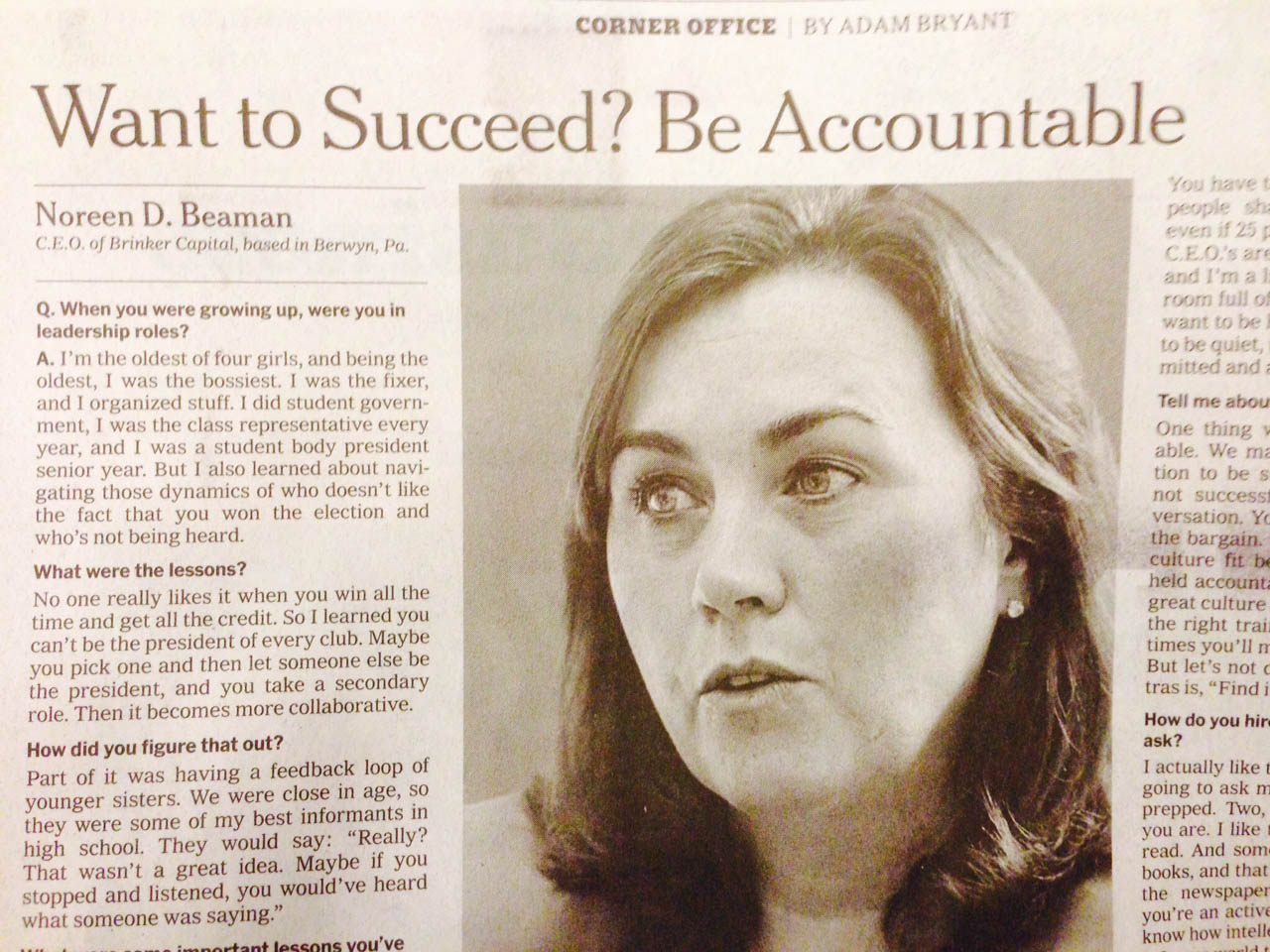
Noreen D. Beaman, the C.E.O of Brinker Capital, is a leader who values listening and being present. As she states in this interview with Adam Bryant, The New York Times Corner Office guru: “I’ve also learned a lot about listening – to really pay attention and be present in the moment.”
Maureen Dowd, The New York Times columnist tells the story of a couple opening an inn catering to higher end tourists who want freedom without jeopardy. It’s an interesting twist on what’s happening throughout the state as business moves into a new and ever expanding industry. Conservative, liberal or in-between this change is here to stay. My sense is that the Marijuana is in its infancy and will become much like alcohol – regulated, taxed and ubiquitous.
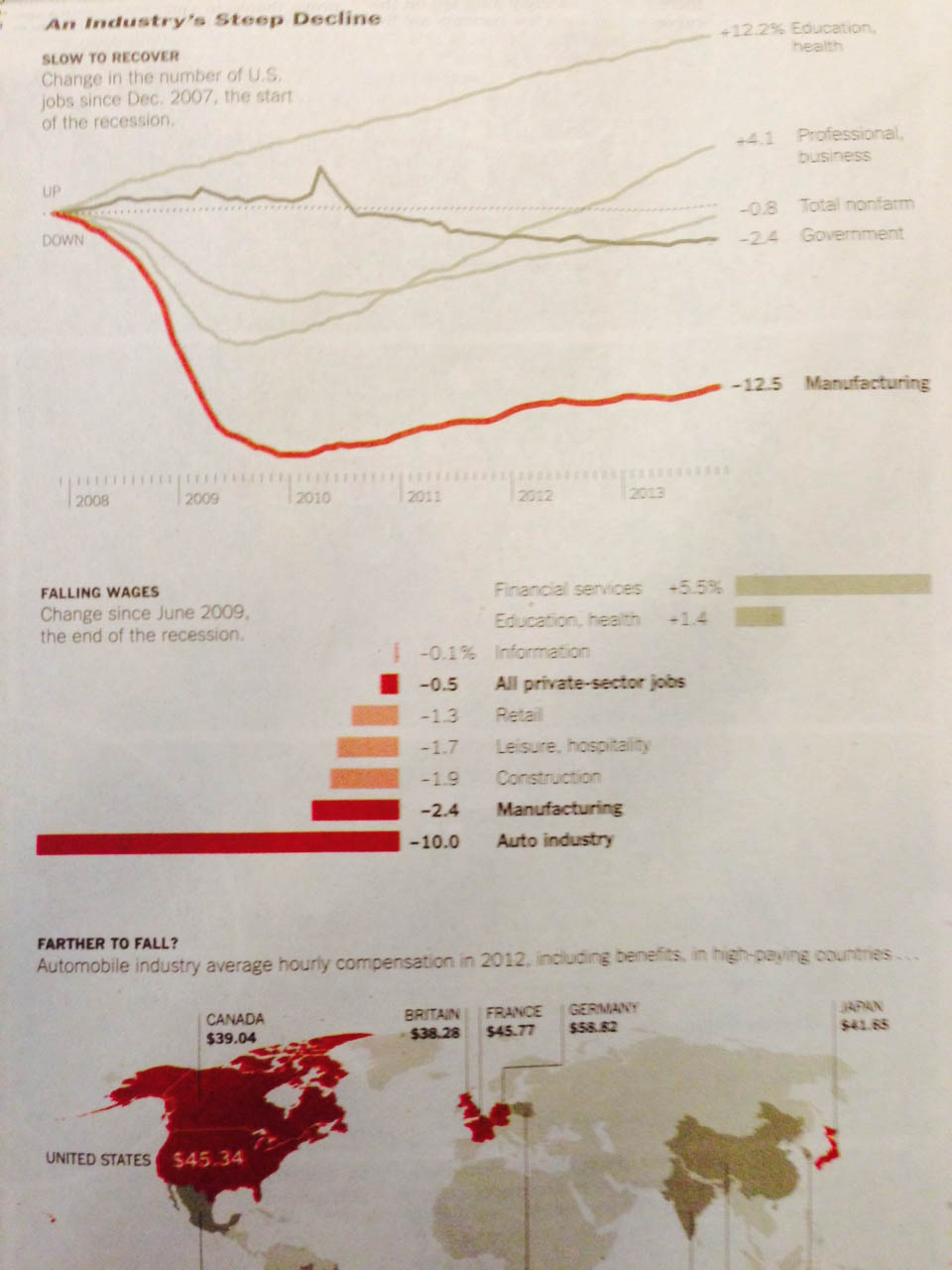
The Myth of Industrial Rebound, a feature article by Steven Rattner in this week’s Sunday Review section of The New York Times offers a broad perspective on the unlikely notion that high paid manufacturing jobs are ever coming back to the U.S. New plants that have opened recently are offering manufacturing jobs that start at wages that are hardly middle class like $12 to $14 an hour. The problems are multifaceted and diverse but essentially we don’t have enough skilled workers and we aren’t competitive enough compared to countries like Mexico whose average wage per worker is roughly $8 an hour versus $45 an hour in the U.S. Increased research and development, added spending on infrastructure, more foreign direct investment, and other policy changes will help but as Mr. Rattner argues, the issues are deeply structural in nature and unlikely to change significantly over time. He states: “in a flattened world, there will always be another China.”
The New York Times Sunday Review section has a cover article on toxic wealth or addiction to money as the author, Sam Polk, a former Wall Street Trader puts it. For years, he felt lousy about seven figure bonuses because colleagues made even more. The money, though outrageous by Main Street standards, was never enough. I have lived and worked in Fairfield County, Connecticut on and off for decades. I have seen this phenomenon many times firsthand as a psychologist and business coach – not having enough. A women I saw recently was bitter at her husband because they went thru several million dollars of her savings, which she got in a divorce to a Wall Street guy, over the course of a ten year marriage and she only had ten million left and it wasn’t nearly enough because even her “poor friends” had more. This not enough mentality is pervasive in our culture, Hollywood and Wall Street being extreme examples. What we don’t have enough of is kindness, creativity, and compassion from my perspective. As Mr. Polk points out, “only a wealth addict would feel justified in receiving $14 million in compensation – as the C.E.O of McDonalds did in 2012 while his company then published a brochure for its work force on how to survive on their low wages.” This is not an easy issue to address in a culture that idolizes the super-rich. It’s a good article to raise awareness, the first step to change!