Successful Women in Male Dominated Careers

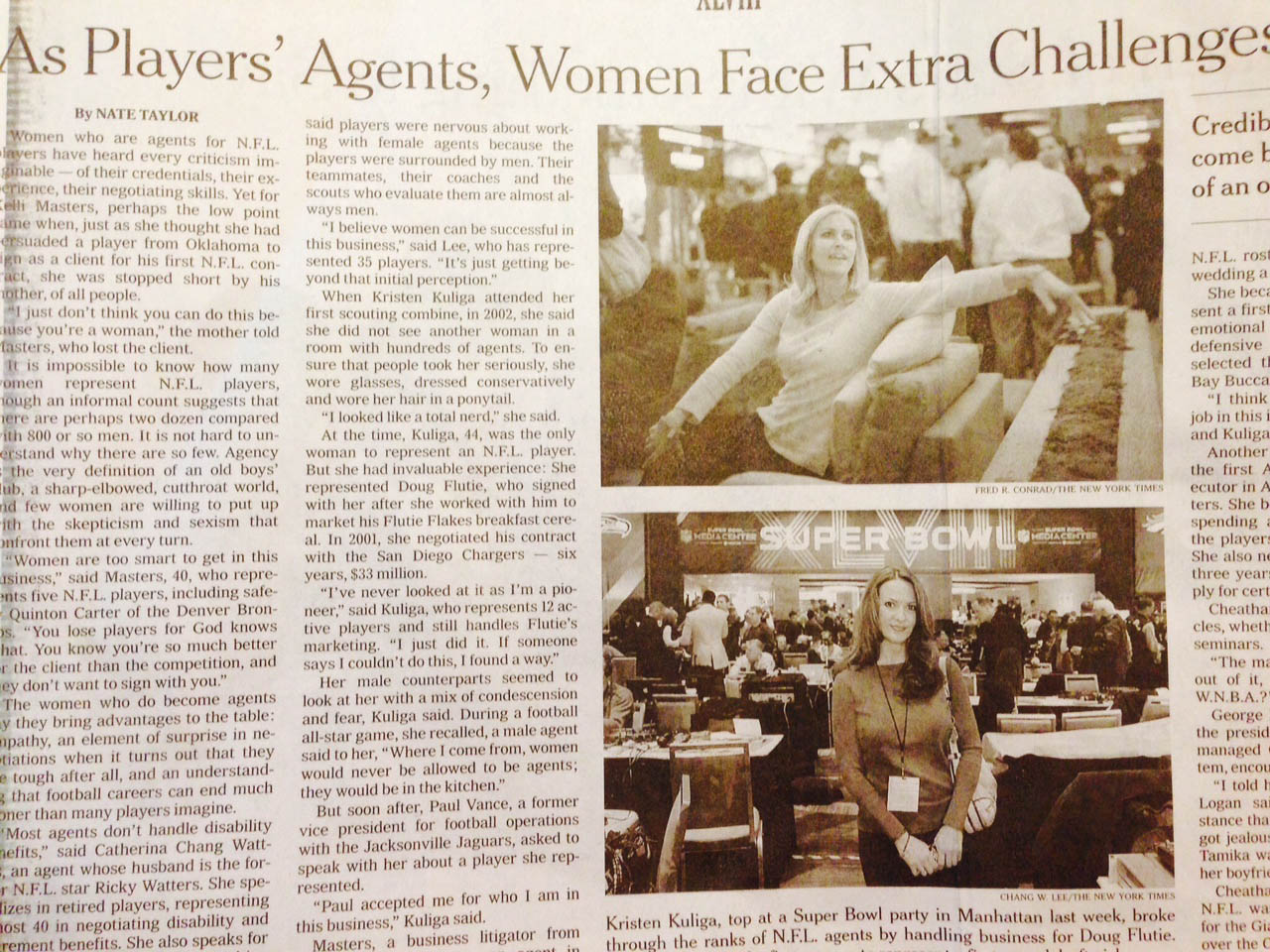
This New York Times Sports Sunday article on female sports agents in the N.F.L. is very interesting. To break into a male dominated profession like engineering is challenging but pro football is a whole other realm! I really respect the women who are up for the challenge and actually succeeding. I often talk about passion, commitment, and perseverance as fundamental aspects of success in life and business. In a profession such as this, Kristen Kuliga, Kelli Masters and others must have all that and more! Good stuff!! read more

An Inspiring Success Story

Adam Case, the 35-year-old offensive coordinator of the Denver Broncos never played college football and was a mediocre high school tight end by all accounts. Through a combination of hard work, ingenuity, and tenacity he worked his way up the ranks of professional football to become an invaluable part of the Broncos offense! read more

The Start of A New Change

Maureen Dowd, The New York Times columnist tells the story of a couple opening an inn catering to higher end tourists who want freedom without jeopardy. It’s an interesting twist on what’s happening throughout the state as business moves into a new and ever expanding industry. Conservative, liberal or in-between this change is here to stay. My sense is that the Marijuana is in its infancy and will become much like alcohol – regulated, taxed and ubiquitous. read more

Manufacturing Jobs

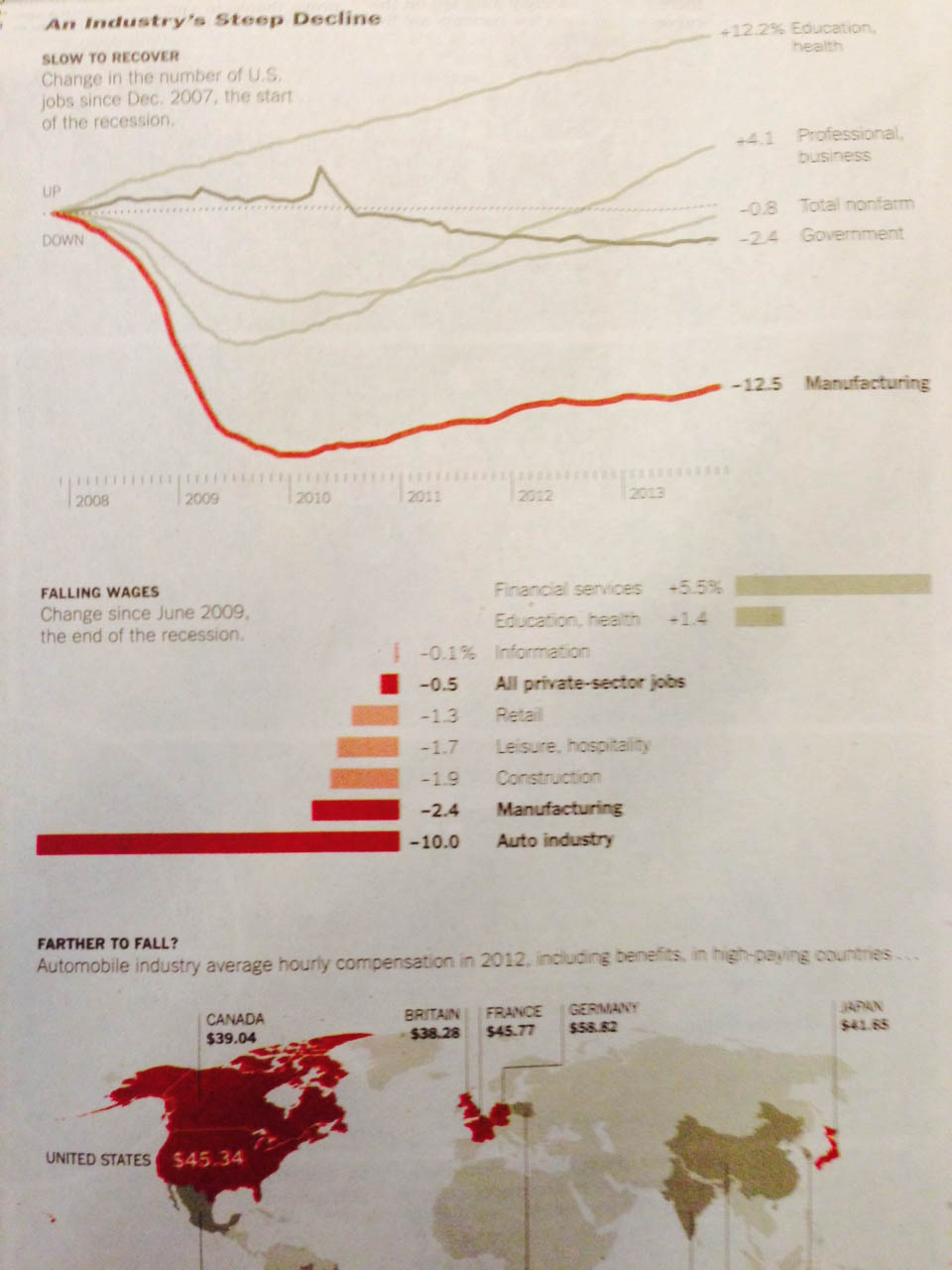
The Myth of Industrial Rebound, a feature article by Steven Rattner in this week’s Sunday Review section of The New York Times offers a broad perspective on the unlikely notion that high paid manufacturing jobs are ever coming back to the U.S. New plants that have opened recently are offering manufacturing jobs that start at wages that are hardly middle class like $12 to $14 an hour. The problems are multifaceted and diverse but essentially we don’t have enough skilled workers and we aren’t competitive enough compared to countries like Mexico whose average wage per worker is roughly $8 an hour versus $45 an hour in the U.S. Increased research and development, added spending on infrastructure, more foreign direct investment, and other policy changes will help but as Mr. Rattner argues, the issues are deeply structural in nature and unlikely to change significantly over time. He states: “in a flattened world, there will always be another China.” read more

Success Is A Skill

According to Amy Chua and Jeb Rubenfeld, Yale law professors and authors of What Drives Success? A New York Times Sunday Review feature article, success in certain ethnic groups has to do with three underlying principles: 1) A superiority complex 2) An inferiority complex 3) Impulse control. For instance, believing that certain groups are chosen, better than or more elite can add extra confidence for individuals to persevere when times are tough. Feeling not good enough, not smart enough or not successful enough can add extra drive or motivation. Without the ability to delay gratification or learn to control one’s impulses, people won’t work hard enough in the now to secure longer term success. This article is very interesting and worth considering. Some statistics are especially interesting like Nigerians who make up less than one percent of the Black population in the United States yet in 2013 nearly one quarter of the black students at Harvard Business School were of Nigerian ancestry. read more

Innovative Leadership Approach

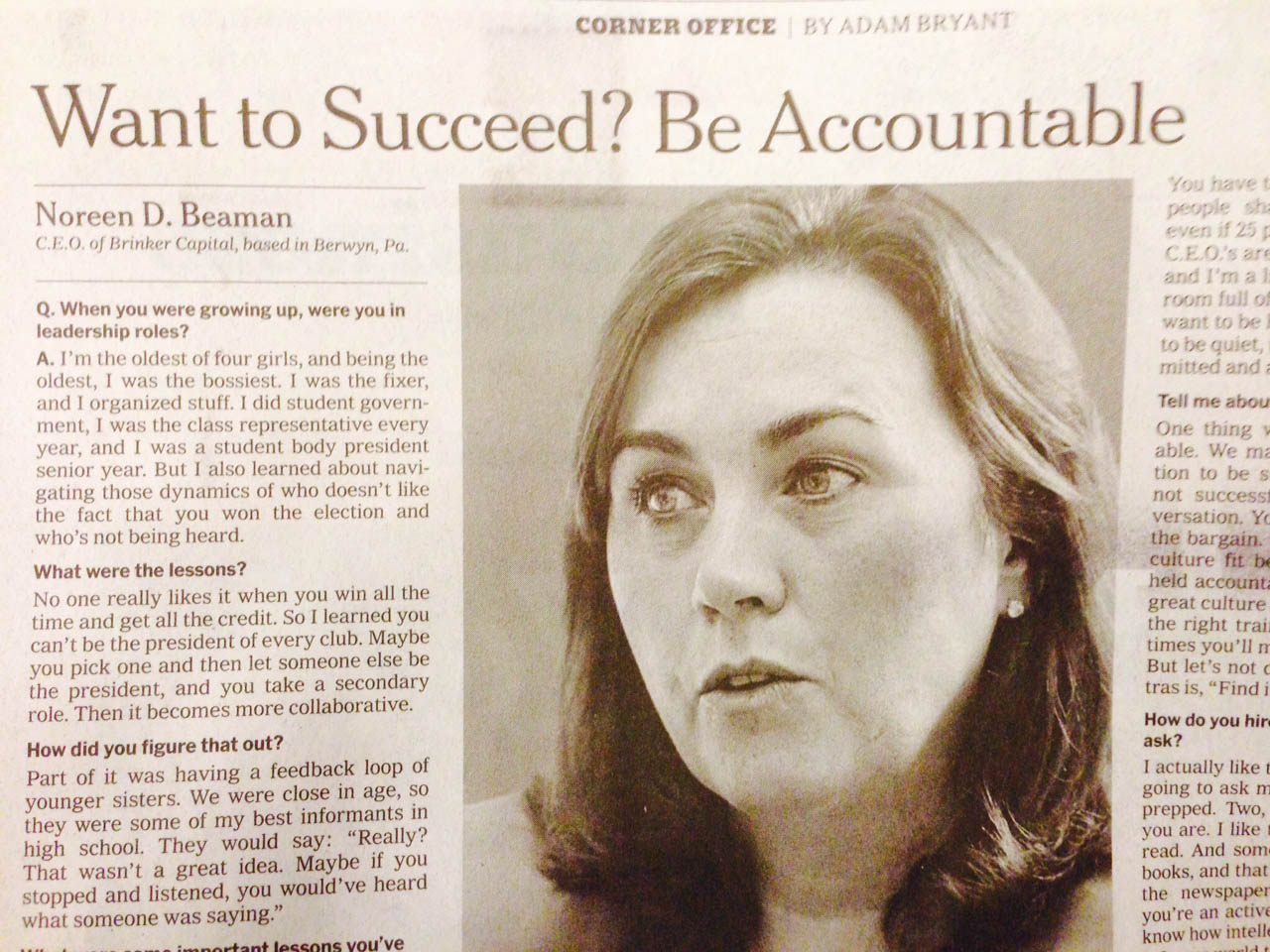
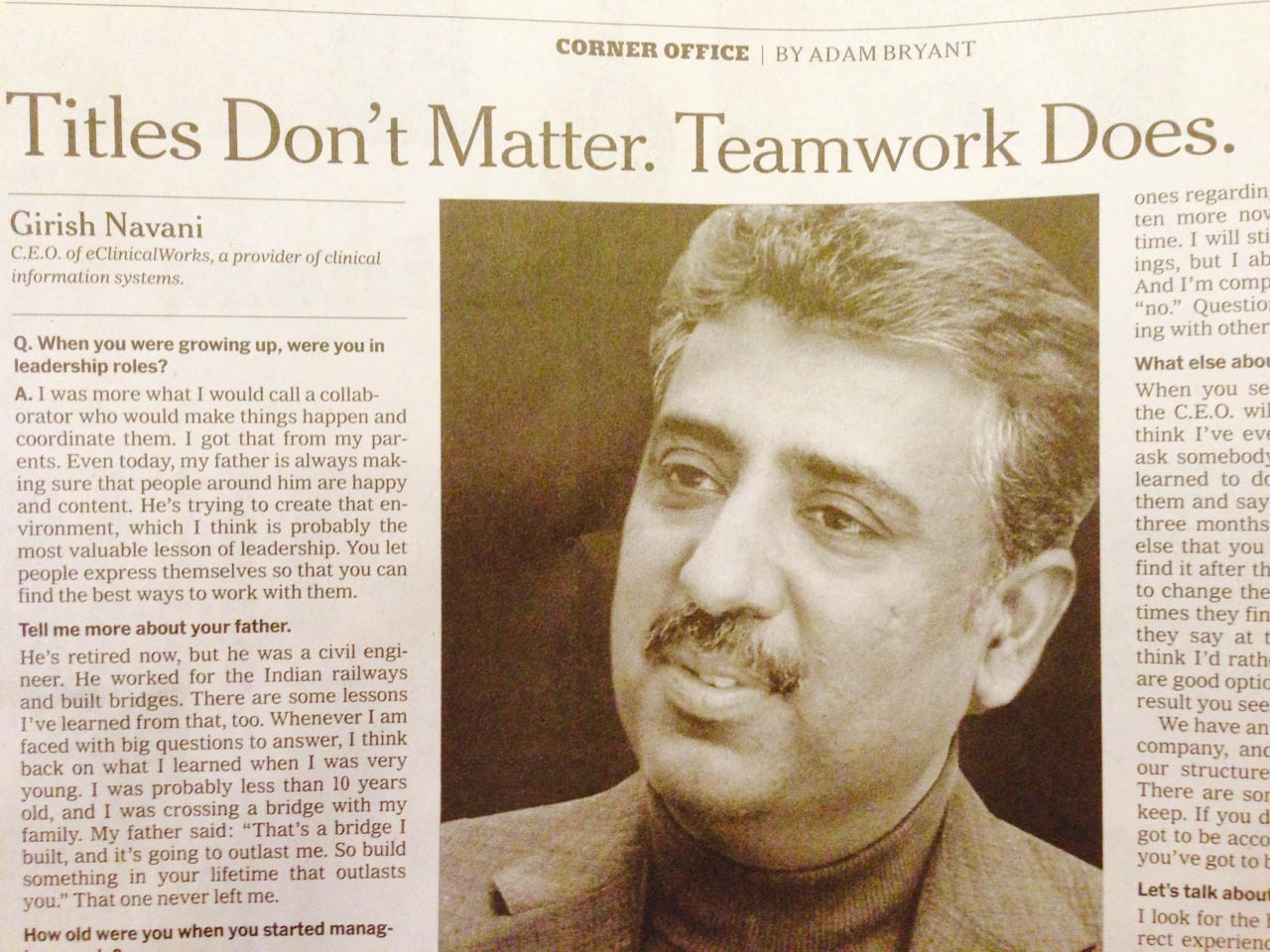
Each week I write about business managers and leaders featured in Adam Bryant’s Corner Office section of the Sunday Business section of The New York Times. Mr. Girish, the C.E.O of eClinicalWorks, a privately operated provider of IT healthcare solutions, says that he hires primarily on “heart” because the rest can be taught. He is seeking passion, commitment, and desire for excellence above all else! Instead of firing people, he tells the employee that it’s not working out and to take three months off to seek something else. If after three months, they want to come back they must change. I love his innovative approach to employee challenges! He also spurns job titles instead creative teams and team leaders! Good stuff Mr. Navani!! read more

Ross Ulbricht and Silk Road

The story of Silk Road Founder Ross Ulbricht in the Sunday Business section of the New York Times is an interesting sketch on a complex personality. On the one hand, he seems to be kind, compassionate, and deeply philosophical young adult who graduated from several top schools, was well regarded by his peers and parents and found a way to create an interesting living confidentially matching buyers and sellers on the web using Bitcoin, a computer generated currency that is currently unregulated. On the other hand, Silk Road seems to have been set up  primarily to provide buyers and sellers of illicit drugs and other illegal activities with a means of connecting anonymously through advanced encryption technology called Tor. Mr. Ulbricht  believed strongly in economic freedom and extremely limited government. The FBI recently arrested him and charged him with a series of crimes that make him out to be a sociopath. read more

Toxic Wealth

The New York Times Sunday Review section has a cover article on toxic wealth or addiction to money as the author, Sam Polk, a former Wall Street Trader puts it. For years, he felt lousy about seven figure bonuses because colleagues made even more. The money, though outrageous by Main Street standards, was never enough. I have lived and worked in Fairfield County, Connecticut on and off for decades. I have seen this phenomenon many times firsthand as a psychologist and business coach – not having enough. A women I saw recently was bitter at her husband because they went thru several million dollars of her savings, which she got in a divorce to a Wall Street guy,  over the course of a ten year marriage and she only had ten million left and it wasn’t nearly enough because even her “poor friends” had more. This not enough mentality is pervasive in our culture, Hollywood and Wall Street being extreme examples. What we don’t have enough of is kindness, creativity, and compassion from my perspective. As Mr. Polk points out, “only a wealth addict would feel justified in receiving $14 million in compensation – as the C.E.O of McDonalds did in 2012 while his company then published a brochure for its work force on how to survive on  their low wages.”  This is not an easy issue to address in a culture that idolizes the super-rich. It’s a good article to raise awareness, the first step to change! read more

The Courage or Craziness of Athletes

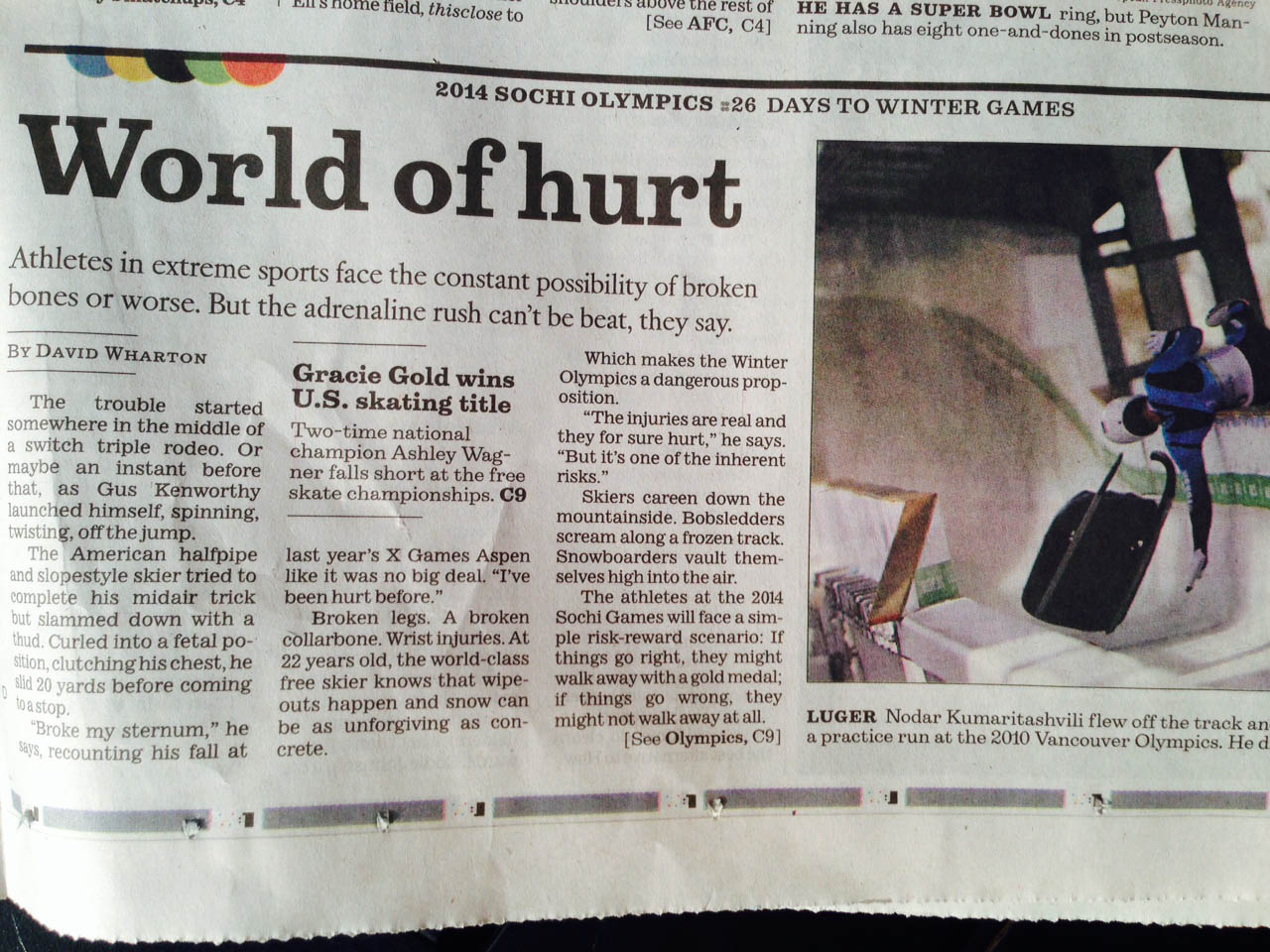
Reading about dangerous sports in the Los Angeles Times Sports section while traveling out here on business made me think about a golfer I am coaching who used to be a professional snowboarder. He’s shared several adrenaline addiction stories having had a series of near death experiences in his younger life as his passion for extreme sports and dangerous situations like surfing in near hurricane conditions nearly got him killed. read more