
Being Proactive

An article in the Sunday Review section of The New York Times by Mary Lou Jepson, a Silicon Valley entrepreneur, is fascinating. It took years of increasingly desperate and bizarre symptoms for doctors to finally discover a pituitary tumor that decimated her body’s ability to produce hormones, especially cortisol, a stress hormone key to immune function. Being proactive, she took it upon herself to get the proper treatment when many doctors dismissed her needs or didn’t get proactive enough themselves. As she writes: “without the ability to fine-tune my hormones and neurochemicals I believe I would have been trapped as a near-imbecile, wheelchair-bound, in my mother’s basement for an abbreviated and miserable adult life.” I coach everyone I work with to develop and trust their instincts, and be proactive and engaging! Clearly, Ms. Jepson’s ability to do so has been a huge part of her recovery and success. Great job!! read more
Early Childhood Education

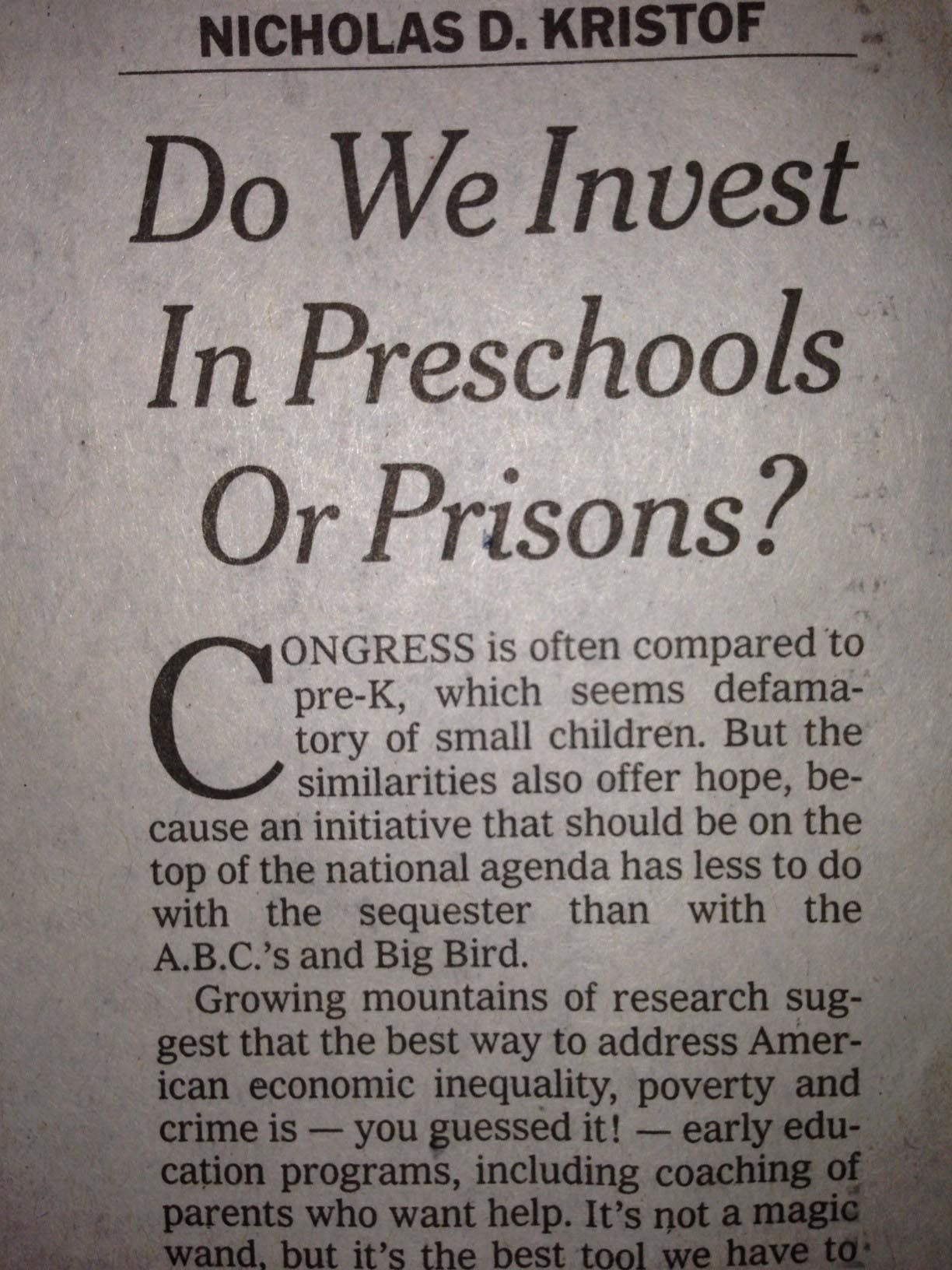
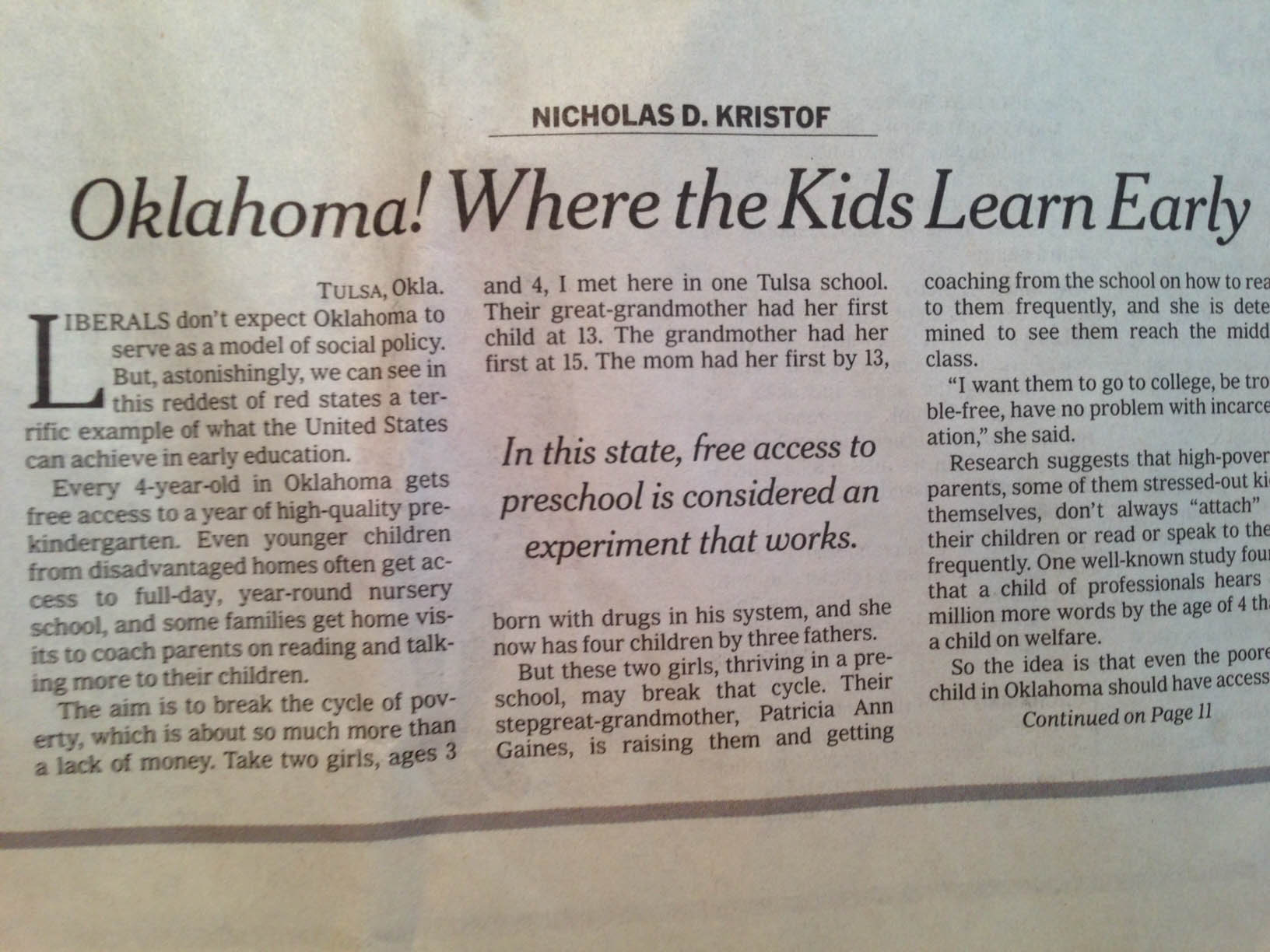
This picture is crinkled because The Sunday Review section of The New York Times traveled with me back from Los Angeles on a recent business trip. I took it with me because I agreed with Nicholas Kristof’s perspective on early intervention so much. As I have mentioned before, I worked at a Head Start Program (Federally mandated preschool for economically disadvantaged children) for three years in the late 90’s. I found the cycle of poverty, poor education, violence, and neglect among these children profoundly disturbing. What many middle upper class people don’t realize how far behind these children fall at such early ages and how much their emotional intelligence is impacted in early childhood. The Oklahoma experiment with mandated preschool for all four year olds and education for overwhelmed mothers sounds wonderful. I hope it succeeds and provides a model for other states! read more

Investing in Education

In his weekly column in the New York Times Review section, Nicolas Kristof discusses the fundamental need for America to address poverty and crime by investing in preschool education and other early childhood education programs. I worked as a mental health consultant for three years at a Head Start Program in South Norwalk, Connecticut. I saw firsthand the value of early childhood education and the need for it. These poor, mostly African American and Hispanic kids, even with assistance, had little chance at the kind of success and opportunity that wealthier children have and continue to have in America. By age 5, the achievement gap can be as much as two years.  In affluent towns, the school systems and teachers are far more skilled at delivering high quality education and support. Impoverished inner city environments put a tremendous burden on the young. Many children are raised by young mothers who lack the skills and resources to parent well. Without additional early assistance, as Kristof writes, we will be increasingly jailing troubled adolescents and young adults who could have been saved. read more

Modalities for Processing Life

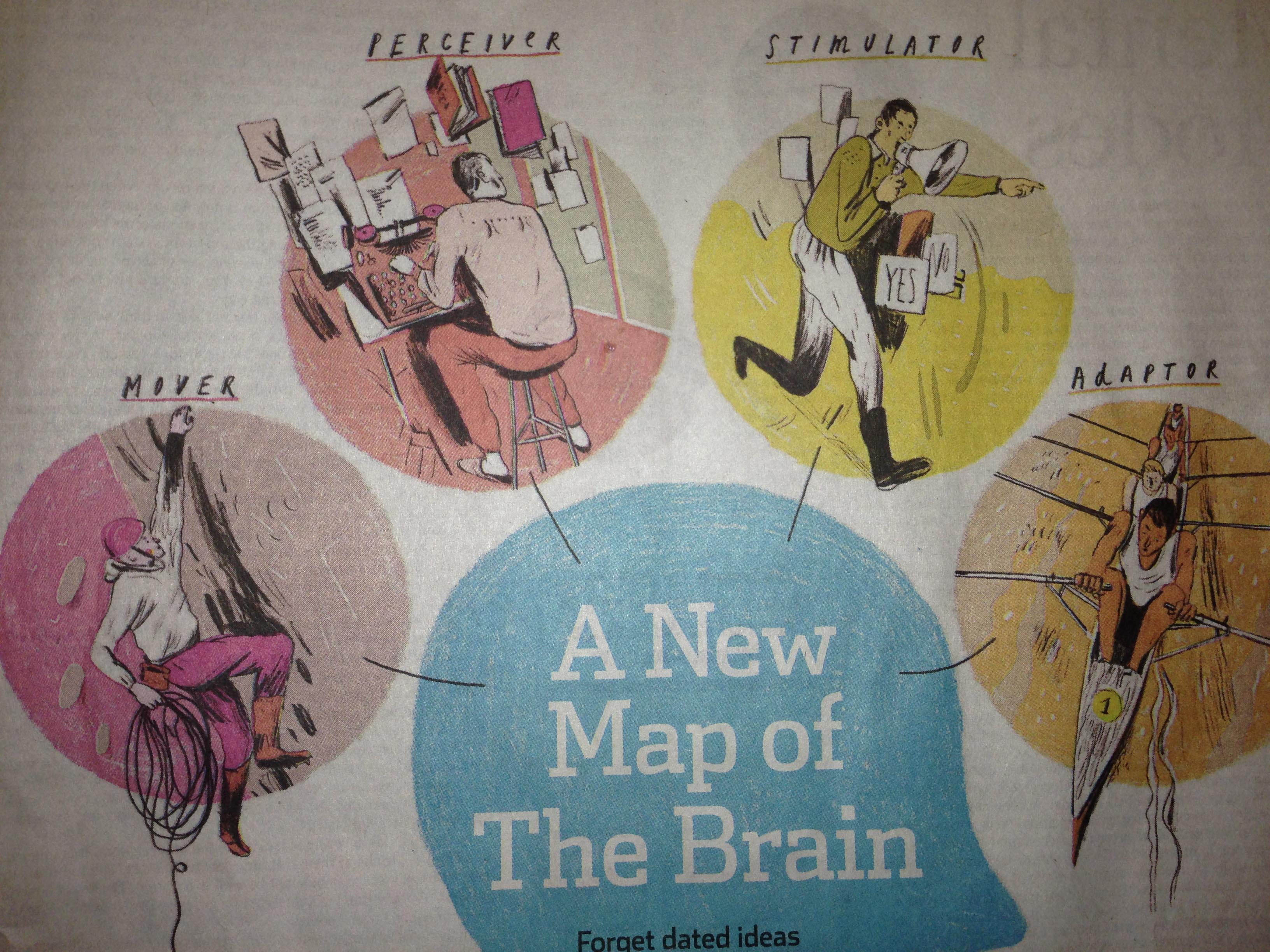
According to Dr. Kosslyn and Wayne Miller, authors of a new book called “Top Brain, Bottom Brain: Surprising Insights Into How You Think,” the right brain, left brain theory of different skill sets like intuition and logic is not true and based on a myth created from experiments on the corpus callosum decades ago. Instead, they propose an understanding of thinking styles based on top or bottom preferences: Mover, Perceiver, Stimulator and Adaptor! Their article in the Weekend Wall Street Journal Review  section is worth reading. Instead of thinking of people as basically left or right brained such as engineers or artists , this new research encourages us to understand that there are really four main styles not two! read more

Being Old is a State of Mind

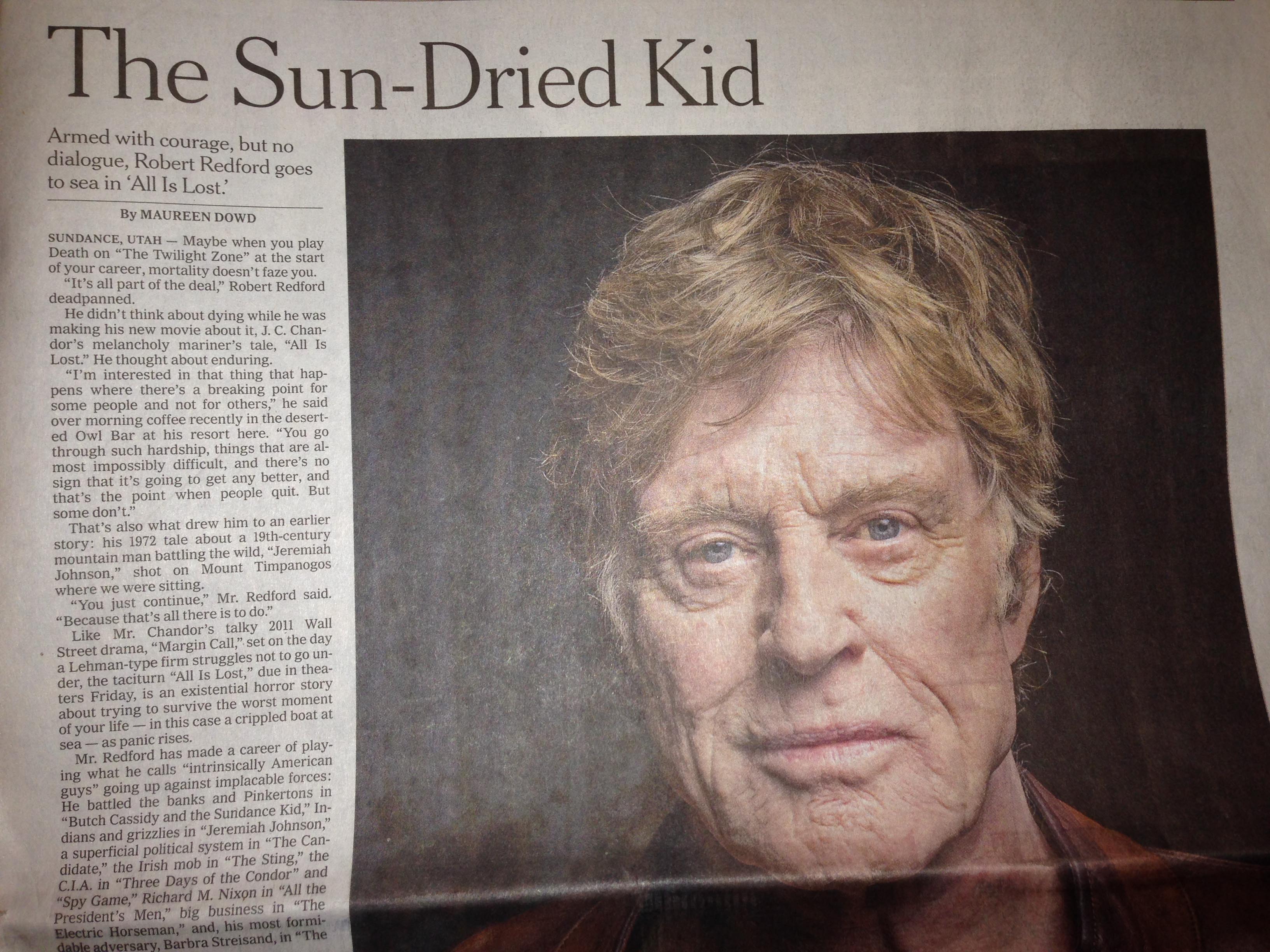
I haven’t seen the movie yet but Robert Redford at 77 has a lot to share about aging, acting, and life. For instance, he is completely comfortable looking like himself – no plastic surgery or Botox. He is clearly an adventurous soul, cares about the environment, budding film makers and challenging himself even in his late seventies – pretty cool! read more

A Prerequisite for Empathy

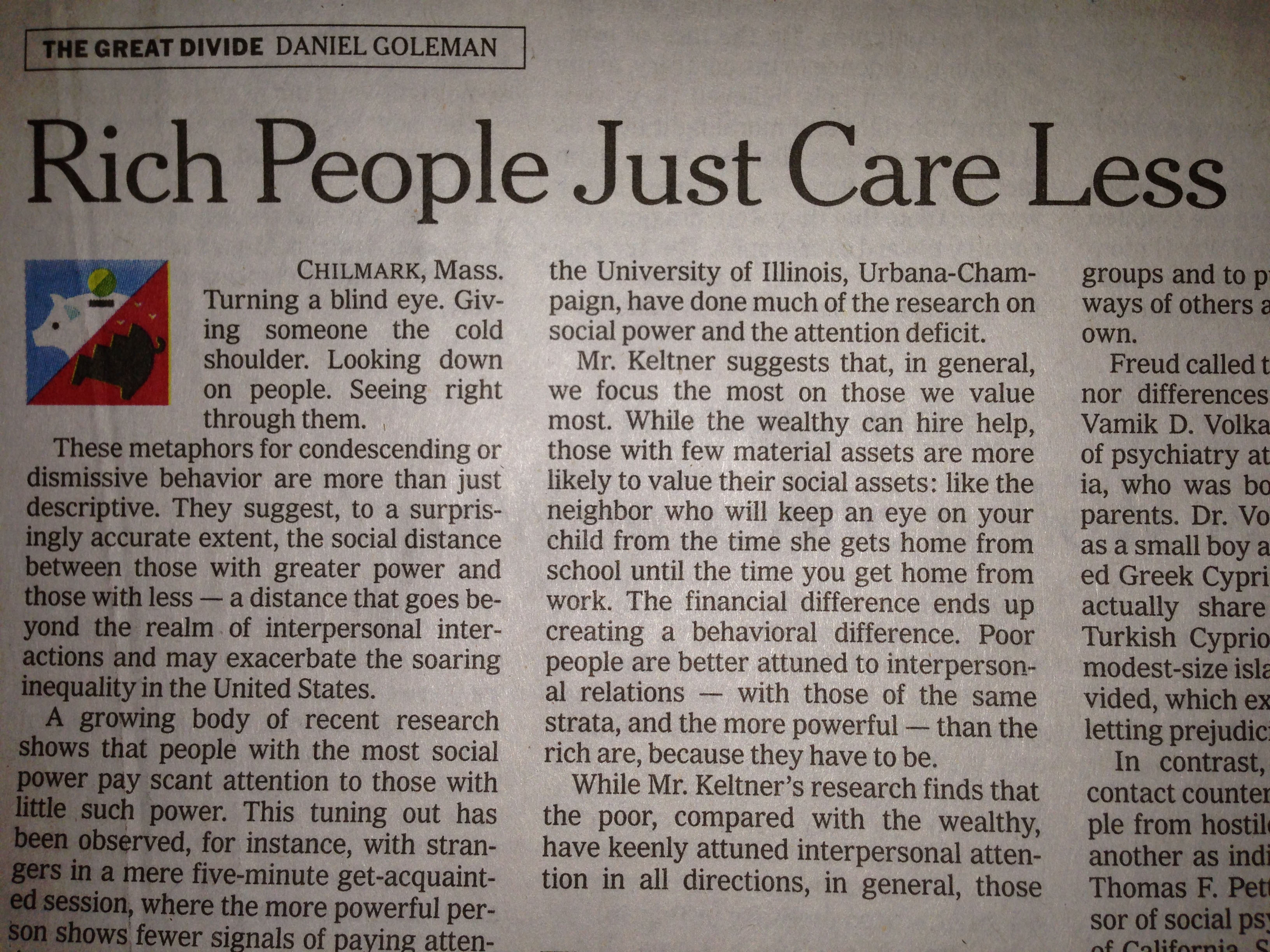
I have spent quite a lot of time with both the rich and the poor in my life. As a psychologist, especially in training, I worked in residential treatment centers and hospital settings with the homeless mentally ill and others of few means. I also worked with poor children at a Head Start program and taught in an inner city college environment. Being an identical twin to a Wall Street guy and having lived and worked in an affluent community for the past 17 years, I have a fair amount of exposure to the wealthy including many affluent friends and clients. In general, I agree with Mr. Goleman’s perspective that the wealthy and more powerful tend to “pay less attention to us than we do to them,” a prerequisite for empathy! Less empathy means less caring. I just read another article in the New York Times business section about the CEO of Bloomingdales who values empathy, caring, and listening a great deal. I loved reading about Mr. Gould and hope others in positions of power and authority will emulate him! read more

The Importance of The Afterlife

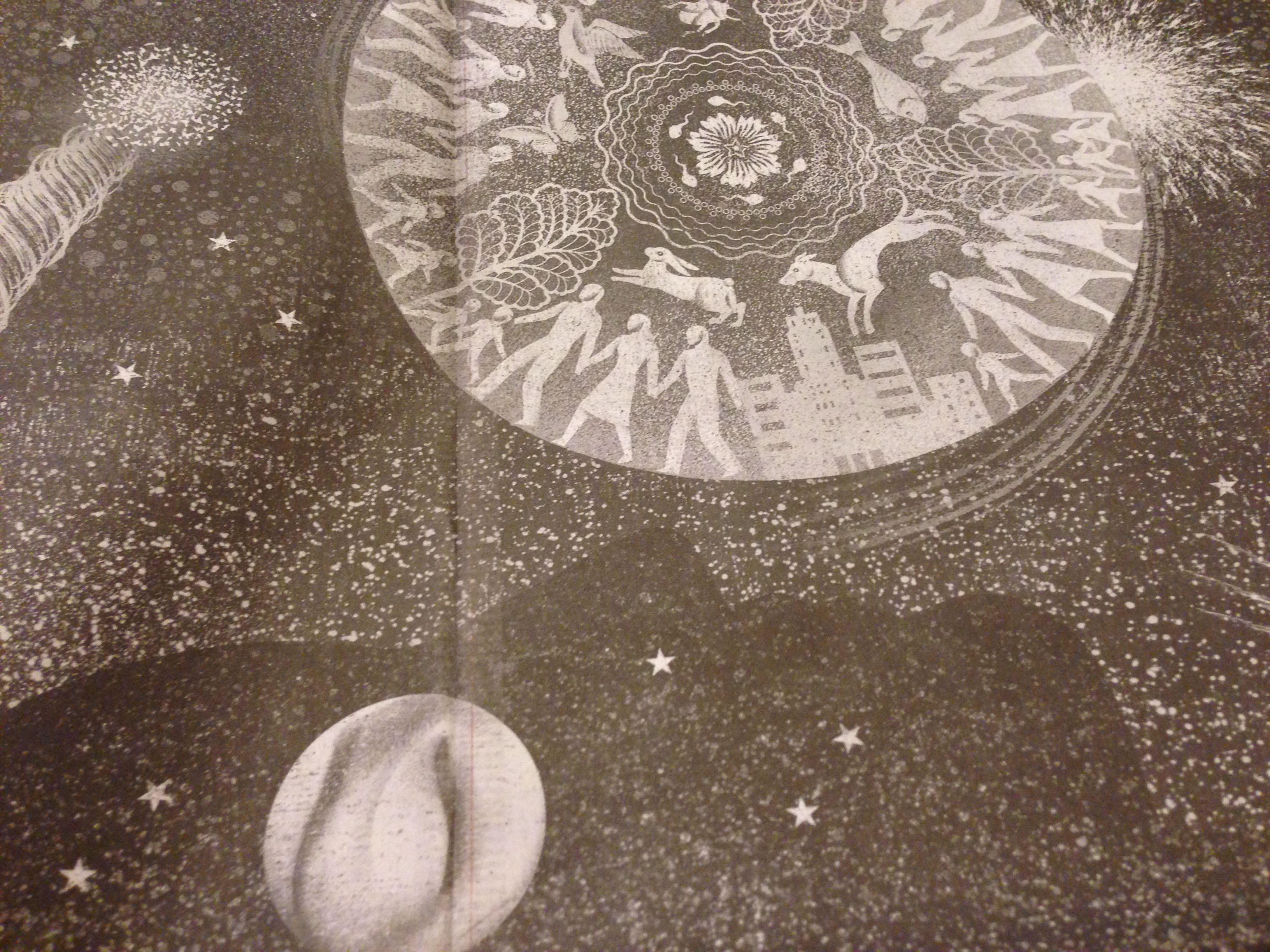
Samuel Scheffler, professor of philosophy and law at NYU, makes an argument in a New York Times Sunday Review article that we need to believe in an afterlife not necessarily because the Soul lives on but because without a belief in the survival of humanity our sense of purpose here would be thrown into disarray. Think what would happen if we knew an asteroid would end humanity just after we died? Would we care about cancer research or better engineering or many other professions that deal with an extended future for mankind? And what about having children? It’s both interesting and thought provoking to consider the necessity of an afterlife from this perspective! read more

Nairobi Mall Shooting

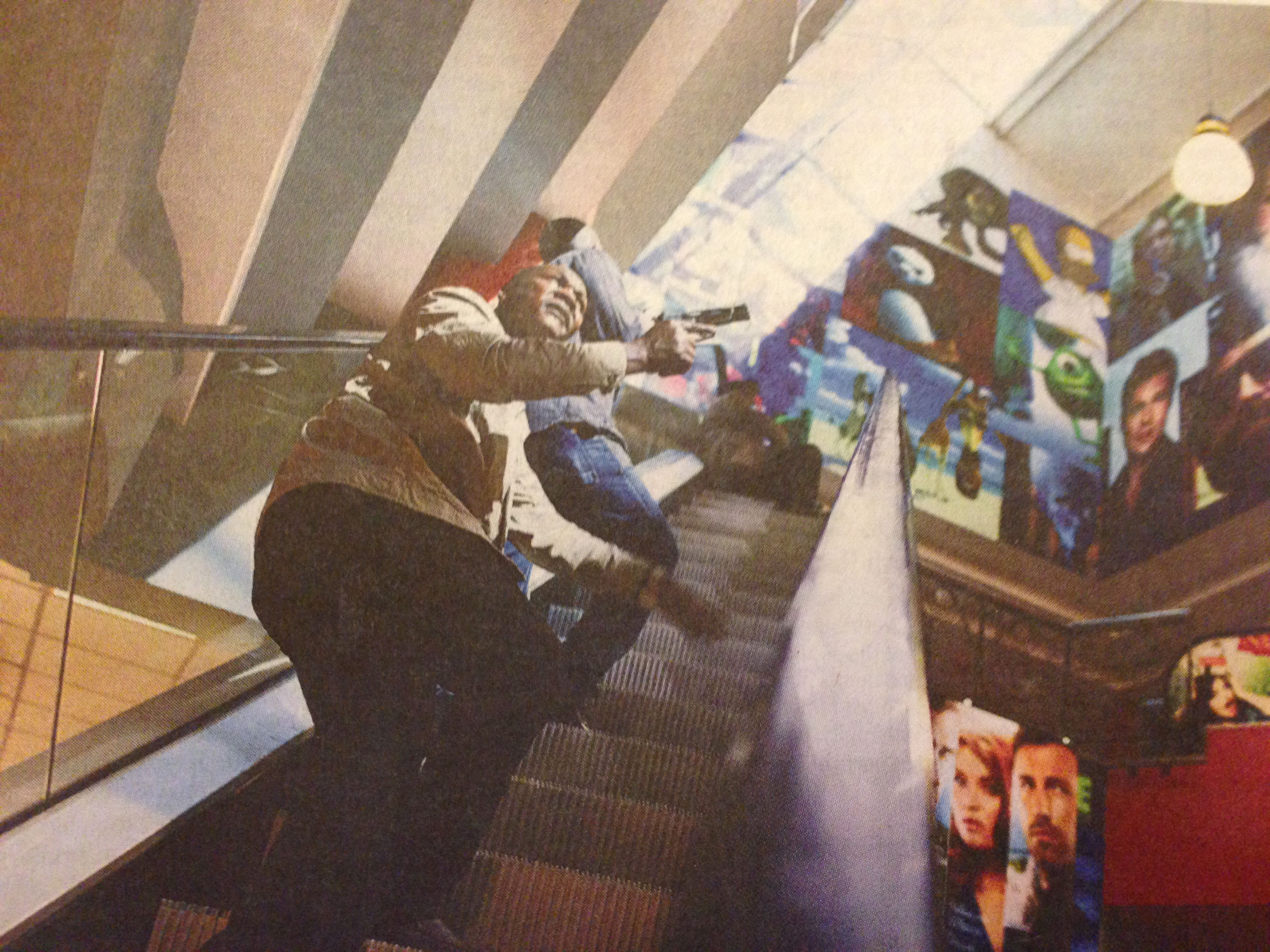
Unfortunately, we are too often reminded of the sheer amount of violence that occurs daily in the world. Yesterday, I briefly watched a television show on the Science Channel about aliens. Several physicists suggested that if aliens had the warp drive technology to travel many light years to our planet then it was likely they would be friendly. They reasoned that a society that advanced would have long destroyed each other had they not grown beyond violence. I see ego as the need to dominate, manipulate, and use others. If all of us learn to observe and unhook from ego, then we are doing our part to make the planet a better place! read more

Two-State Illusion

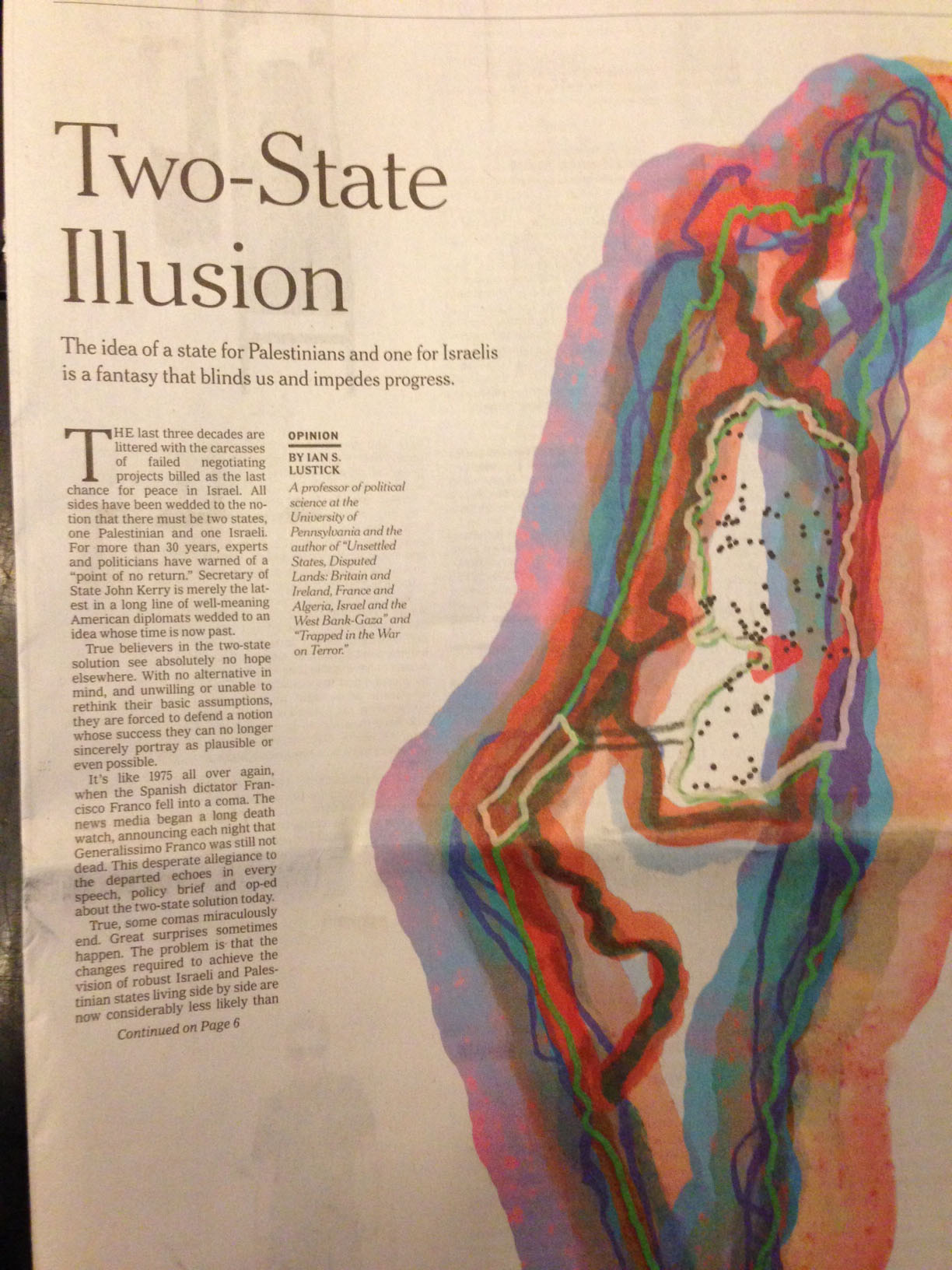
Ian Lustick, a U-Penn political science professor and Middle East expert since 1980, argues intelligently that a two-state solution to the mess in Israel between Palestinians and Jews is not only an illusion but its continued belief is causing harm to the piece process itself. He outlines why self-interest propels each party to continue to propose a solution that will never occur and has long lost it’s viability. For instance, professor Lustick suggests that the Palestinian Authority “needs it’s people to believe progress is being made toward a two-state solution so it can continue to get the economic aid and diplomatic support that subsidize the lifestyle of its leaders, the jobs of tens of thousands of soldiers, spies, police officers, civil servants, and the authority’s prominence in a Palestinian society that views it as corrupt and incompetent.” He goes on to outline American, Israeli, and “peace process” industry motives as well before discussing more realistic solutions. read more

Dr. Brett- opportunity for change

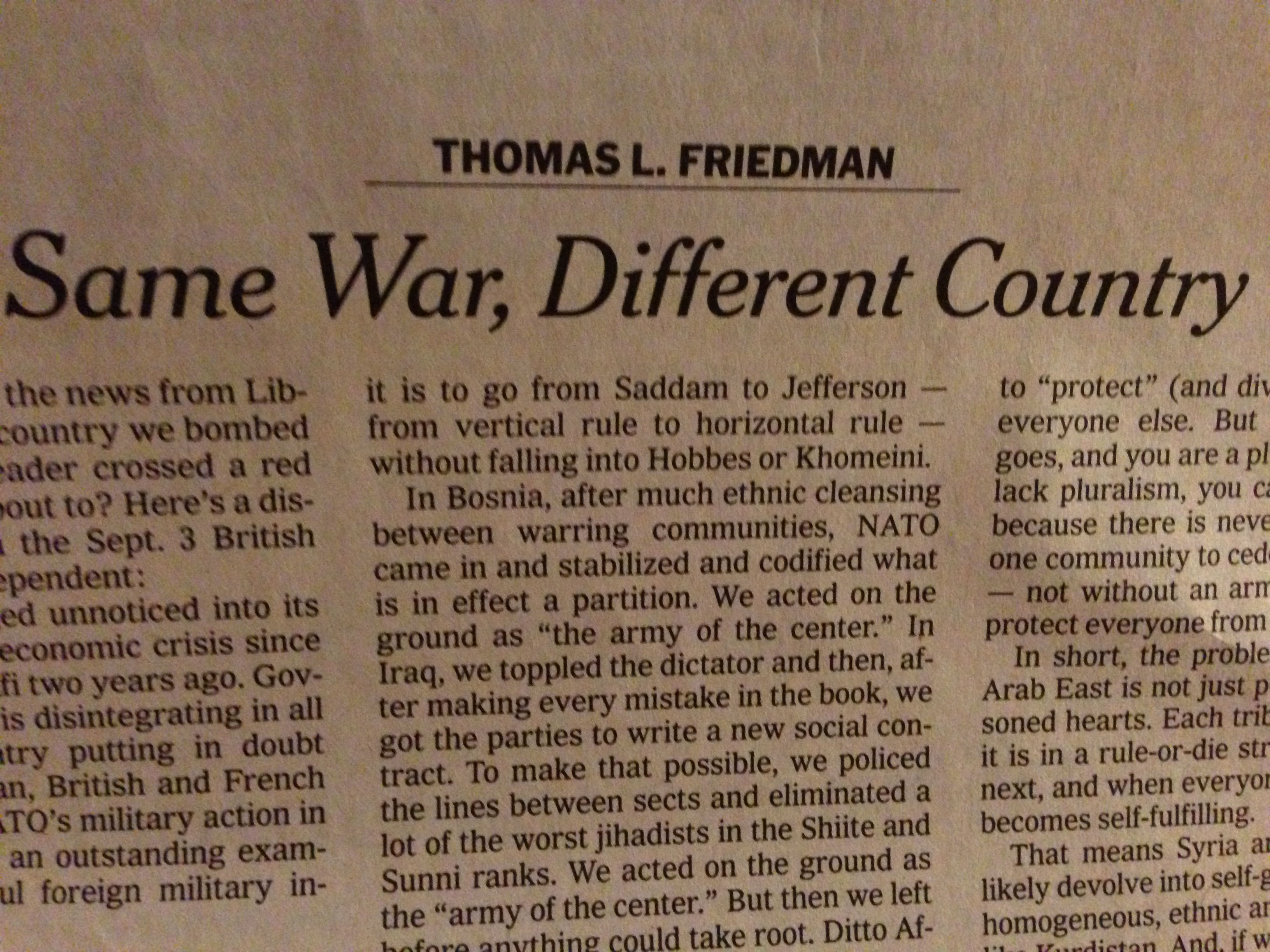
The idea that we must do something significant about the civil war in Syria seems silly to Mr. Friedman who argues that Sunnis and Shiites have been fighting since the 7th century over the rightful heir to the Prophet Muhammad’s “spiritual and political leadership.” He notes that without boots on the ground to control and develop the center, any intervention will fail as our intervention to take out the dictator Qaddafi has plunged Libya unnoticed into severe economic and political crisis. And since that is not happening, “arm and shame” is our only sensible foreign policy there. I like Friedman and this article is worth reading in detail. It’s an excellent summary of why America’s credibility is not at stake here. Perhaps Obama’s credibility is but as Friedman suggests, Arab civilizations have largely missed every giant opportunity for positive change. read more